HVAC Systems for Schools: Your Techs Already Know What’s Broken
Is your indoor air quality (IAQ) strategy built months in advance? On paper, this seems smart, predictable. But the reality is, the earliest signs of airflow problems and equipment strain rarely begin in a meeting. They begin in the field.
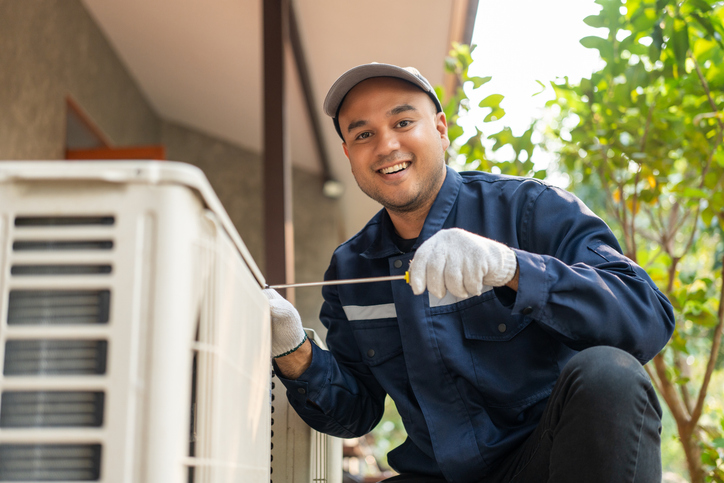
Facility managers and maintenance staff walk the campus every day. They climb rooftops, open mechanical rooms, pull loaded filters, and listen to equipment under stress. Technicians often see and hear what is changing inside the system, long before a complaint about poor air quality reaches the central office. These valuable insights already exist, why not leverage them?
The Bite-sized Read:
41% of U.S. public school districts fail to meet ASHRAE ventilation standards, making on-site monitoring and real-time human insights even more critical.
Adopting an extended-life filtration strategy can generate around $52,000 in annual savings for medium-sized school districts, without adding staff or replacing existing equipment.
By combining insights from your HVAC technicians with air quality monitoring, classroom air purifiers, and high-capacity HVAC filters, your school can improve indoor air quality while reducing overall costs.
What Frontline Technicians See In Educational Facilities
Technicians interact daily with school HVAC systems, ventilation systems, air handling units, and other building systems that support indoor air quality across the school building. While school administrators may review performance metrics and energy costs, technicians see how heating ventilation and air equipment function in real time within educational facilities.
Think of your maintenance team as a living data source. Every rooftop visit, every filter change, every mechanical inspection produces data points. When you don’t consistently capture those observations, your IAQ plan relies only on dashboards and schedules, not on the operating reality of your buildings.
Field-level observations rarely make it into formal reports, yet they are the first warning signs of poor indoor air quality, airflow imbalance, or equipment strain that can eventually affect the entire district.
Common field observations include:
Filters loading unevenly before the scheduled change date, reducing effective air filtration and limiting fresh outdoor air delivery.
Visible bypass around filter racks due to gaps or poor fit, allowing airborne pollutants and particulate matter to circulate through school ventilation systems.
Increased dust accumulation in returns and supply grilles, indicating rising levels of indoor air pollutants within multiple classrooms.
Blower motors running longer cycles or operating louder than normal, often tied to airflow restriction and higher energy consumption.
Belts wearing prematurely due to airflow resistance, placing additional strain on ventilation and air conditioning components.
Units struggling during peak heating or cooling periods, affecting thermal comfort, humidity control, and relative humidity balance.
These are not minor maintenance details. They are early indicators of airflow restriction, inefficient air filtration, and potential equipment strain across school facilities. Left unaddressed, these issues can contribute to poor air quality, higher energy usage, rising operational costs, and increased health risks for school occupants.
How Do You Turn Technician Insight Into Better Air Quality?
Improving indoor air quality in HVAC systems for schools does not require adding more work to already stretched facilities teams. It requires formalizing what HVAC technicians are already observing inside school HVAC systems, air handling units, and ventilation systems. When frontline insight is documented consistently, you can gain defensible performance metrics tied directly to air quality, energy efficiency, and system reliability across each school building.
Every maintenance technician carries years of building-specific knowledge: how certain units behave in winter, which classrooms run warm, where airflow weakens during peak occupancy, the list goes on. That knowledge is valuable. But if it isn’t documented, it disappears when the shift ends.
When technician observations are structured and paired with monitoring data, your HVAC strategy becomes two-sided: real-world insight plus measurable validation. Without that balance, decisions are driven only by schedules or dashboards, not by how your systems actually perform day to day.
By capturing real-world operating data from existing schools, facility managers can better understand how air filtration, fresh outdoor air intake, humidity control, and overall air flow affect building occupants. This is especially important if your school has budget constraints and can’t afford replacing an old HVAC system.
You can implement simple, structured practices such as:
Recording filter condition at removal to evaluate particulate matter buildup and indoor air pollutants.
Tracking pressure drop readings across representative air handling units to monitor airflow restriction and energy usage.
Documenting visible bypass, rack integrity concerns, or signs of mold growth that may compromise good indoor air quality.
Reviewing IAQ monitoring data, carbon dioxide levels, and relative humidity trends quarterly with facilities, finance, and school administrators.
Over time, these steps create a reliable data set grounded in actual operating conditions within educational facilities. Instead of relying on industry averages, you can evaluate how your ventilation and air conditioning systems are truly performing.
That data supports continuous improvement, helps improve air quality, protects student health and well being, and ensures that HVAC systems remain a critical component of a comfortable learning environment that supports academic success and student performance. It also makes it easier to see whether your systems are meeting the ventilation standards schools are expected to follow.
Said ventilation standards are established by the ASHRAE (the American Society of Heating, Refrigerating and Air-Conditioning Engineers), they define on a national level what is acceptable indoor air quality and airflow in commercial buildings.
“A national assessment revealed that over 41% of U.S. public schools have ventilation systems that fail to meet ASHRAE standards, exposing millions of students to poor air quality. Addressing these deficiencies requires strategic investments in HVAC system upgrades, improved air filtration technologies, and real-time air quality monitoring.” PubMed Central
Reduce Reactive Maintenance Through Early Signals
Comfort complaints are often lagging indicators of deeper indoor air quality and ventilation issues. By the time a classroom feels stuffy, carbon dioxide levels rise, or school staff report dust buildup, air flow has often been restricted for weeks. Air handling units may have been overcompensating by running longer cycles, increasing energy consumption and placing additional strain on existing equipment such as blowers, belts, and heat pump components. Over time, this strain affects energy efficiency, accelerates wear, and raises operational costs across school facilities.
When technician observations and IAQ monitoring data are captured early, districts can intervene before poor indoor air quality escalates into larger system failures.
Early signals can point to:
Overloaded air filtration
Bypass within school ventilation systems
Elevated particulate matter
Imbalanced humidity control
An extended-life filtration strategy addresses these issues early, allowing districts to stay ahead instead of reacting to problems.
The Extended-Life Filtration Strategy
So, what exactly is an extended-life strategy? This innovative approach involves high-capacity HVAC filters, air purifiers in classrooms, and air quality monitoring.
1. Use High-Capacity Filters
Rather than pushing systems to higher MERV levels they were never designed to handle, switch to high-capacity filters that provide more filter media and longer service life without excessive pressure drop. Plus, if the system is already equipped with pressure drop monitoring, you can guide the filter changeouts by actual performance data instead of fixed schedules.
This approach helps maintain airflow, protect equipment, and reduce unnecessary maintenance while avoiding the operational issues that can result from over-restrictive filtration.
2. Strengthen Classroom-Level Air Protection
While central HVAC systems manage whole-building ventilation, the air students breathe is concentrated in classrooms. Placing Alen air purifiers directly in these spaces adds a frontline layer of protection. Using HEPA filtration designed to capture 99.9% of harmful airborne particles (including allergens, viruses, and PM2.5) these units continuously clean the air at the source.
Because they operate independently of the HVAC system, they improve classroom air quality without adding strain to existing equipment. The result is cleaner air where it matters most and a stronger, layered IAQ strategy without costly infrastructure changes.
3. Air Quality Monitoring
The final piece is air quality monitoring strengthened by the insight of the technicians who work inside the system every day. Instead of relying on assumptions or fixed schedules, you can combine real-time performance data with frontline observations to guide ventilation and filtration decisions.
Monitoring tools track indicators like CO₂, particulate levels, temperature, humidity, and filter pressure, giving facilities teams measurable insight into system performance. At the same time, HVAC technicians provide context that dashboards alone cannot: noticing uneven filter loading, unusual blower behavior, airflow imbalances, or early signs of equipment strain. When these field observations are documented alongside monitoring data, patterns become clearer.
Importantly, modern air quality monitors are not high-cost capital investments. Many systems are affordable, scalable, and in some cases embedded directly within classroom air purifiers. Monitoring does not require a large budget request, but it does require commitment to validation.
Save Money By Doing Less
For a medium-sized district (approximately 30 schools), adopting this strategy generates $52,000 in annual savings, without adding staff or replacing existing equipment. The savings come from fewer consumables, reduced labor demands, and lower risk exposure, creating measurable savings while maintaining operational stability.
What Districts See When They Partner With Alen
By moving beyond the quarterly system to an extended-life filtration strategy with Alen, you can see the benefits show up in everyday operations as well as in the classroom experience. Systems aren’t pushed to their limits, and HVAC performance becomes more steady and predictable. Campuses experience fewer disruptions, more consistent indoor conditions, and better overall comfort.
The best part is that these improvements do not require major capital upgrades or construction projects. Instead, they come from making smarter adjustments within the systems districts already have in place.
With an extended-life strategy you can see:
Annual savings around $52,000
Reduced reactive maintenance
More stable airflow across campuses
Fewer comfort and temperature complaints
Reduced maintenance requests
Improved indoor air quality consistency
Less strain on aging HVAC equipment
Ready to improve IAQ the smart way?
Call the Alen number at 800-630-2396 or contact us here to learn how districts are achieving better air without costly replacements.
