Contact Us
Nationwide Support
Our team of air quality experts is specially trained to understand the unique challenges of each region across the United States.
Connect with an expert!
Contact Your Region's Representative
West of Texas
Matt Graham
East of Texas
Aiman Barakat

Reduce Airborne Exposure
The Alen Partnership Program uses high capacity medical-grade HEPA filtration. By continuously removing fine particles from the air, organizations can reduce airborne exposure risks and support healthier spaces for everyone.
Streamline Operations
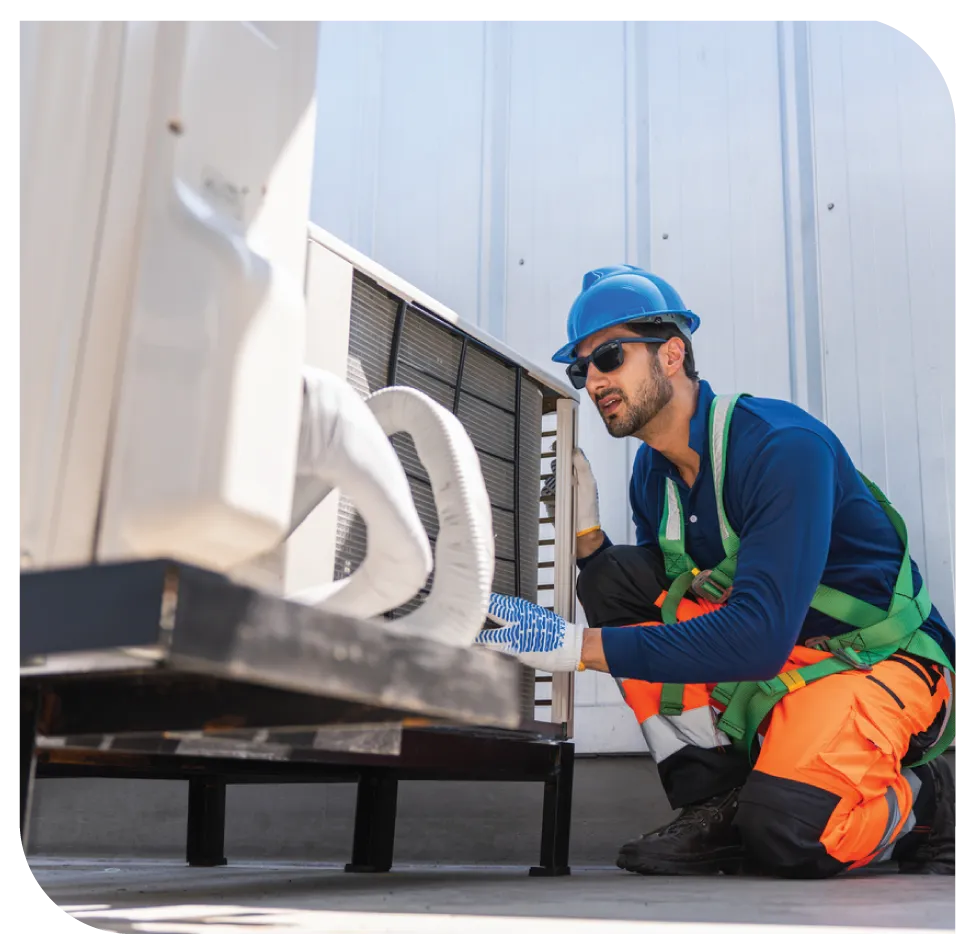
Easily manage devices and filter maintenance through a centralized system. Teams can track performance, schedule filter changes, and maintain reliable air purification without complicated workflows or manual oversight.

Simplify Procurement
Find budget efficiencies with an easy procurement process, reduce costs with fewer changeouts, and improve efficiency with better data.
Knowledge Center

When The Low Bid Becomes Expensive
Competitive bidding and unit pricing are standard practice, especially if your school has tight budget constraints. So it makes sense to choose the lowest price per HVAC filter for school HVAC systems, right?
Not really.
Cheaper filters often lead to inconsistent performance, higher energy usage, added strain on air handling units, and more frequent rework. You may be saving money on price per unit, but you’ll end up spending even more on damaged inventory, emergency orders, lost labor time, and more.
Fortunately, there is a more effective approach to saving money while keeping IAQ high: an extended-life filtration strategy. With this strategy you can support student performance and overall well-being of everyone in the building, without hurting your pockets.
The Bite-sized Read:
By using high quality filters and replacing them based on performance (not the calendar), you can save about $16,380 annually on filter costs alone.
An extended-life strategy can generate over $50,000 in annual savings by reducing labor, material use, and risk.
Using high-capacity HVAC filters, classroom HEPA purifiers, and air quality monitoring, delivers better IAQ without adding staff or replacing existing equipment.
The Illusion of Unit Price
Unit price is easy to see and simple to compare. It fits neatly into procurement spreadsheets and budget reviews for public schools managing HVAC investments across multiple educational facilities. What it does not reflect is how air filtration performs inside real HVAC systems for schools over time.
A low-cost filter that arrives damaged, fits poorly within air handling units, or loads unevenly can disrupt ventilation systems and reduce overall energy efficiency. Inconsistent construction can contribute to poor air quality, restricted air flow, and added strain on heating ventilation and air equipment.
Those hidden costs accumulate through warehouse handling issues, technician time spent correcting fit problems, premature replacement cycles, emergency purchases, and increased energy consumption caused by airflow resistance.
When you only focus on cost per unit, you overlook the broader impact on operational costs, energy usage, indoor air pollutants, and the performance of other building systems. In the context of school facilities, the lowest bid often optimizes the smallest variable in a much larger equation that directly affects building occupants and the overall learning environment.
Reorder Frequency and Inventory Management
If your air filtration products require frequent reordering due to shorter service life or inconsistent durability, you take on added administrative and operational strain. It also increases the risk of stockouts during peak heating or air conditioning seasons, when ventilation systems are already under pressure. This added complexity raises operational costs and diverts attention from higher-priority building systems.
Filters designed for longer service life and predictable performance reduce reorder frequency and stabilize inventory management. With fewer emergency purchases and more consistent air filtration across air handling units, facility managers gain better budget forecasting, improved energy efficiency, and stronger control over operational costs within existing school infrastructure.
Measuring Total Cost Instead of Unit Price
Unit price feels controllable. It’s easy to compare, easy to justify, and easy to defend in a bid process. But in HVAC filtration, unit price is often the smallest and least important number in the equation.
When your district relies on quarterly changeouts with lower-cost filters, the total annual impact adds up quickly.
Quarterly changeouts multiply labor hours, increase ladder and rooftop exposure, raise administrative handling, and create more opportunities for injury and rework. The material cost becomes just one line item in a much larger operational burden.
An extended-life strategy reduces the number of change events, stabilizes labor demands, lowers risk exposure, and cuts material consumption in half. Instead of optimizing the cheapest component, you optimize the entire system.
To understand the impact, let’s model the difference between a traditional quarterly replacement schedule and a performance-driven extended-life strategy across a typical 30-school district.
Total Cost Impact: Quarterly vs Extended-Life Filtration
The issue isn’t the price per filter. It’s the cost of replacing them too often.
Damage Rates and Hidden Replacement Costs
Low-cost air filtration products are often more vulnerable to frame warping, corner separation, or media damage during shipping and warehouse handling. Even small structural weaknesses can affect how filters sit inside air handling units, leading to bypass that allows airborne pollutants and particulate matter to circulate through school ventilation systems.
When filters do not fit securely, technicians need to adjust installation or revisit units sooner than planned. And that extra labor increases operational costs and strains facility managers. Poor fit can also restrict air flow, forcing heating ventilation and air equipment to work harder, increasing energy consumption and long-term energy costs.
If even a small percentage of filters arrive damaged or become unusable in storage, reorder frequency rises. Those additional orders introduce:
Extra shipping expenses
Administrative time for school staff and purchasing departments
Delays that disrupt planned maintenance across building systems
Over time, these inefficiencies erode any savings gained from a lower initial bid.
The Extended-Life Filtration Strategy
So, what exactly is an extended-life strategy? This innovative approach involves high-capacity HVAC filters, air purifiers in classrooms, and air quality monitoring.
1. Use High-Capacity Filters
Rather than pushing systems to higher MERV levels they were never designed to handle, switch to high-capacity filters that provide more filter media and longer service life without excessive pressure drop. Plus, if the system is already equipped with pressure drop monitoring, you can guide the filter changeouts by actual performance data instead of fixed schedules.
This approach helps maintain airflow, protect equipment, and reduce unnecessary maintenance while avoiding the operational issues that can result from over-restrictive filtration.
2. Add Alen Air Purifiers
To capture fine particles at a very high efficiency, such as viruses, bacteria, smoke, and allergens, you can deploy Alen HEPA air purifiers directly in classrooms.
Because HEPA purifiers operate independently of the HVAC system, they:
Capture very small particles effectively
Do not add resistance to airflow
Reduce the particulate burden before it reaches return ducts
This allows HVAC systems to operate as designed while still delivering high-quality air.
3. Air Quality Monitoring
Air quality monitoring ensures filtration decisions are based on performance, not guesswork. By tracking CO₂, particulate levels, humidity, temperature, and filter pressure drop, districts can see how their systems are actually operating in real time.
Instead of relying on fixed quarterly schedules, filters can be replaced when pressure data indicates it’s necessary. Rising CO₂ or airflow changes can be addressed before complaints surface. When combined with HVAC technician insight, this data provides clear direction on when to adjust, when to intervene, and when to leave the system alone.
Monitoring protects both IAQ and budgets by aligning maintenance with actual building performance rather than the calendar.
Improve Your School’s IAQ With Alen
By shifting to an extended-life filtration approach with Alen, you can improve air quality and operational performance at the same time.
Systems operate within their intended capacity instead of being pushed to the edge. Airflow becomes more consistent. Classrooms feel more stable. Maintenance teams spend less time reacting and more time managing proactively.
With an extended-life strategy, you can expect:
Approximately $52,000 in annual savings
Fewer reactive maintenance issues
More consistent airflow across campuses
Fewer comfort and temperature complaints
Reduced maintenance requests
Stronger indoor air quality consistency
Less strain on aging HVAC equipment
Better air. Lower risk. Predictable costs.
Ready to improve IAQ the smart way?
Call the Alen number at 800-630-2396 or contact us here to learn how districts are achieving better air without costly replacements.


Proactive Health Leadership
Move from reactive air management to proactive health leadership. Air quality monitoring (AQM), airID technology, and environmental sensors provide real-time awareness of indoor air conditions. Insights that allow you to identify issues early and optimize air performance.

Build Trust
Transparent air performance and solid sustainability practices builds confidence with employees, customers, and stakeholders.
Request a Consultation
Get a personalized and detailed assessment of your school district's needs, and how Alen For Business can help save you money and streamline your operations.

Online & Phone Operating Hours
Mon to Fri: 8AM–5PM CST
The Program
About Us
Online & Phone Operating Hours
Mon to Fri: 8AM–5PM CST