
Contact Us
Nationwide Support
Our team of air quality experts is specially trained to understand the unique challenges of each region across the United States.
Connect with an expert!
Contact Your Region's Representative
West of Texas
Matt Graham
East of Texas
Aiman Barakat

Reduce Airborne Exposure
The Alen Partnership Program uses high capacity medical-grade HEPA filtration. By continuously removing fine particles from the air, organizations can reduce airborne exposure risks and support healthier spaces for everyone.

Streamline Operations
Easily manage devices and filter maintenance through a centralized system. Teams can track performance, schedule filter changes, and maintain reliable air purification without complicated workflows or manual oversight.

Simplify Procurement
Find budget efficiencies with an easy procurement process, reduce costs with fewer changeouts, and improve efficiency with better data.
Knowledge Center
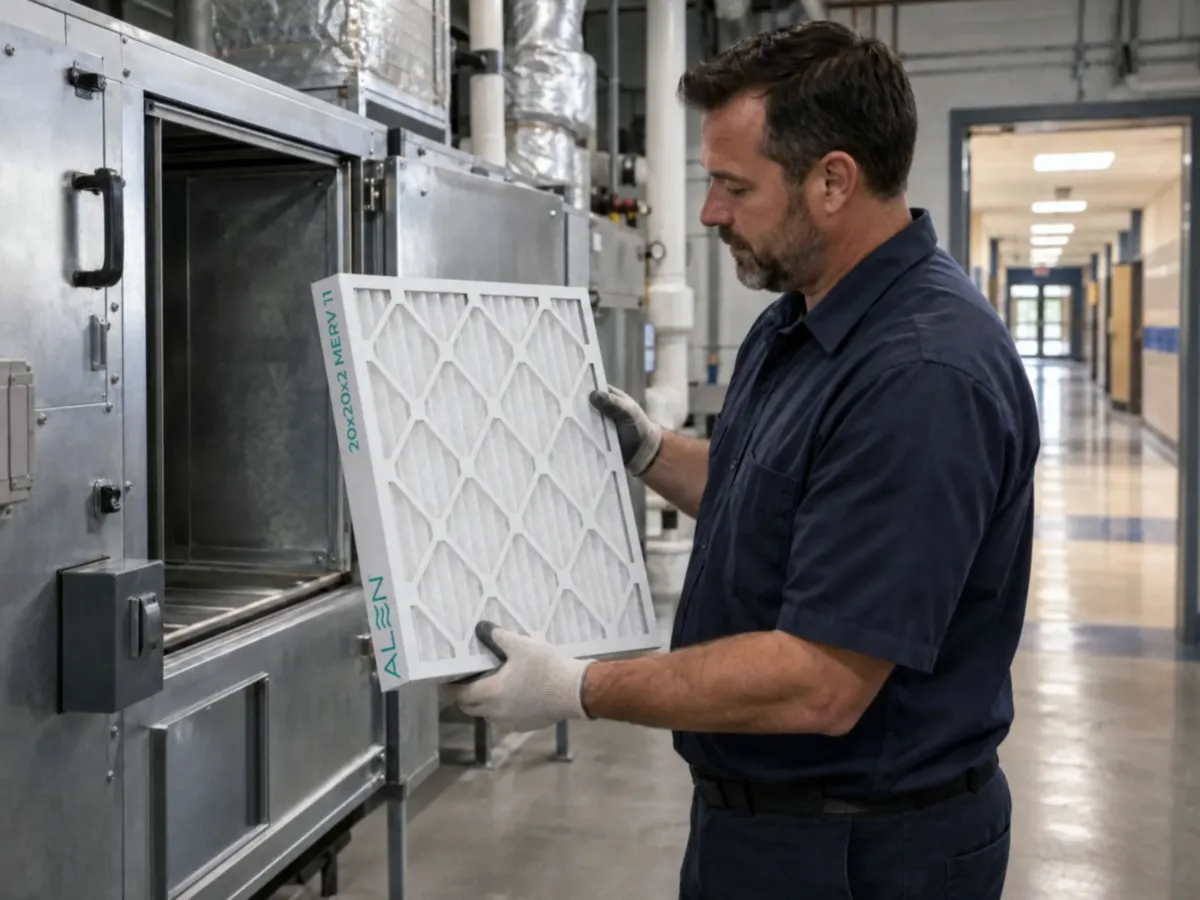
The High-Capacity Advantage: Why Filter Design Matters
When you evaluate HVAC filters, size, MERV rating, and price are natural starting points—MERV 8, MERV 11, MERV 13. Those details matter, but they do not explain how much a filter can hold or how often your team will need to replace it.
For many districts, filter replacement becomes a familiar routine: order the same sizes, follow the same quarterly or scheduled changeout cycle, and repeat. The filter’s capacity may never enter the purchasing discussion.
One of the biggest differences between filters that otherwise look similar is capacity: how much dust and other particulate matter the filter can hold before replacement is needed.
Standard-capacity and high-capacity filters can have the same dimensions and MERV rating. A high-capacity design uses more usable filtration media and greater surface area to hold more particles and can support a longer service interval when properly matched to the system.
For a school district, that can mean fewer filters to buy and fewer changeouts to coordinate. A high-capacity filter may cost more upfront, so the better comparison is annual value: what each filter costs and how long it can realistically remain in service in your building
No Time to Read? Here's the Gist
Capacity describes how much particulate matter a filter can hold before replacement is needed. MERV describes particle-removal efficiency.
Usable media area, construction, and airflow resistance help determine how a filter performs over time.
A properly specified high-capacity filter can support longer service intervals and reduce annual purchasing and replacement work.
Standard vs. High-Capacity: What's Actually Different?
At first glance, two pleated HVAC filters of the same dimensions and MERV rating can look similar. Inside, however, the amount of usable filtration media can be different.
A standard-capacity filter generally contains less media than a comparable high-capacity design. Both capture airborne particles, but the available media area influences how much material can accumulate before the filter needs to be changed.
A high-capacity filter uses optimized pleating to create more usable filtration surface within the available frame.
Comparison | Standard-capacity HVAC filter | High-Capacity HVAC Filter |
|---|---|---|
Filtration media | Less media within the filter | More media within the filter |
Pleating | Less usable media area | More usable surface area created through optimized pleating |
Particle-holding capacity | Holds less material before becoming loaded | Holds more material before becoming loaded |
Usable filter life | May require more frequent replacement | Can support longer service intervals when properly specified |
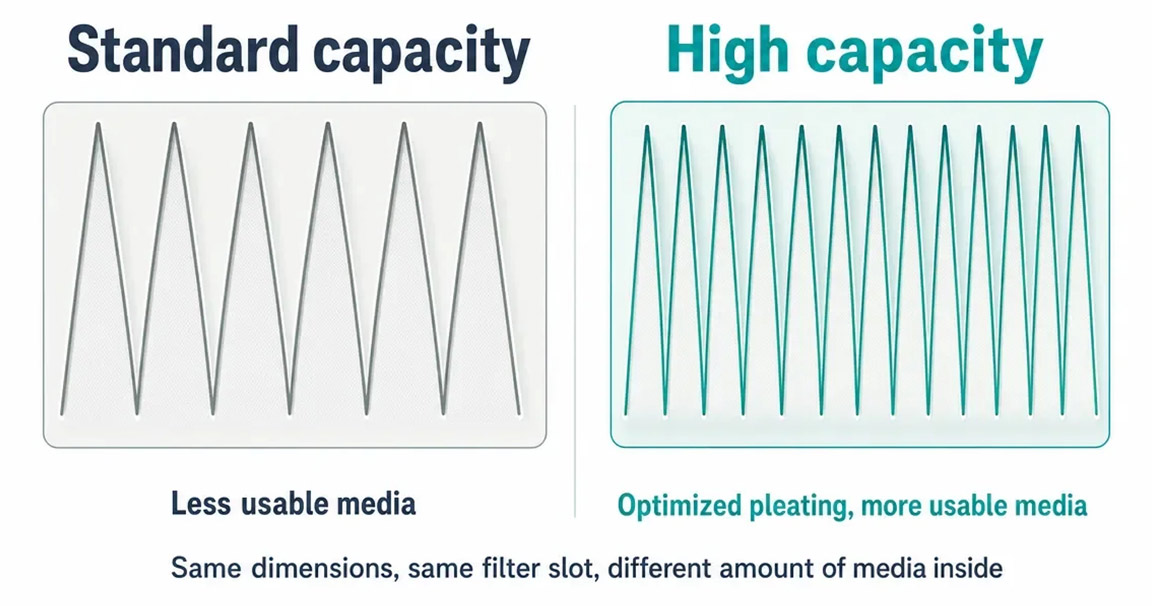
How Pleating Creates More Usable Surface Area
Pleating folds filtration media into a compact shape, allowing more surface area to fit inside the filter frame.
The design of those folds matters. Pleat depth and spacing affect how much media is available to collect particles as air moves through the filter. Pleat count alone does not tell you how well a filter will perform; media type and airflow resistance also matter.
With more usable media, captured particles can spread across a larger surface instead of accumulating as quickly in one area.
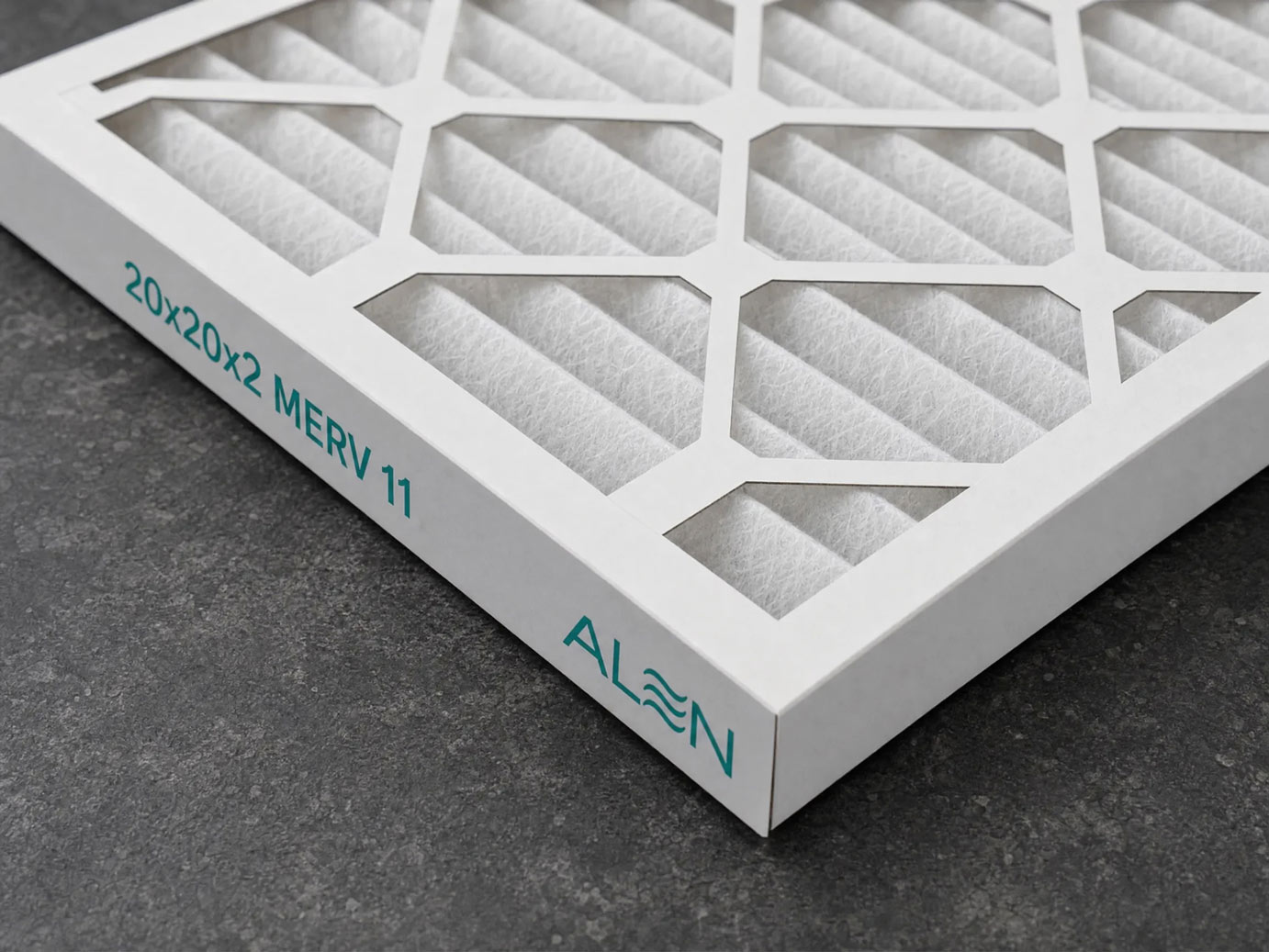
More usable media → greater potential dust-holding capacity → potential for longer service life.
Why Dust-Holding Capacity Matters
Every filter becomes loaded over time. As particles accumulate, airflow resistance increases. Eventually, the filter reaches the point where it needs to be replaced.
A properly specified high-capacity filter can hold more dust before reaching its recommended changeout limit.
The potential advantages include:
Greater dust-holding capacity
More dust-holding capacity before reaching the recommended changeout pressure drop
Longer intervals between replacements
Actual service life depends on the filter, dust levels, operating hours, and the HVAC system. Continue routine inspections and follow manufacturer guidance. Monitoring pressure drop can help your team determine when replacement is needed.
Don't Compare Filters on MERV Rating Alone
MERV describes how efficiently a filter captures particles within specified size ranges. It does not, by itself, establish dust-holding capacity or service life.
Two MERV 8 filters can meet the same efficiency classification while differing in media area, airflow resistance, and replacement needs.
Before comparing two filters on price, ask:
How much filtration media is actually inside?
How much dust can it hold?
What airflow is it designed to support?
What are its initial and recommended final pressure drops?
How often will it realistically need to be replaced?
Those answers give you a more complete picture of the filter’s value than MERV rating or unit price alone. Ask for product data at the airflow your equipment requires.
Those details also belong in your purchasing specifications. Three Sentences That Fix Bad HVAC Filter Contracts explains how clearer requirements for construction, performance, and airflow can help prevent substitutions that change what your district receives.
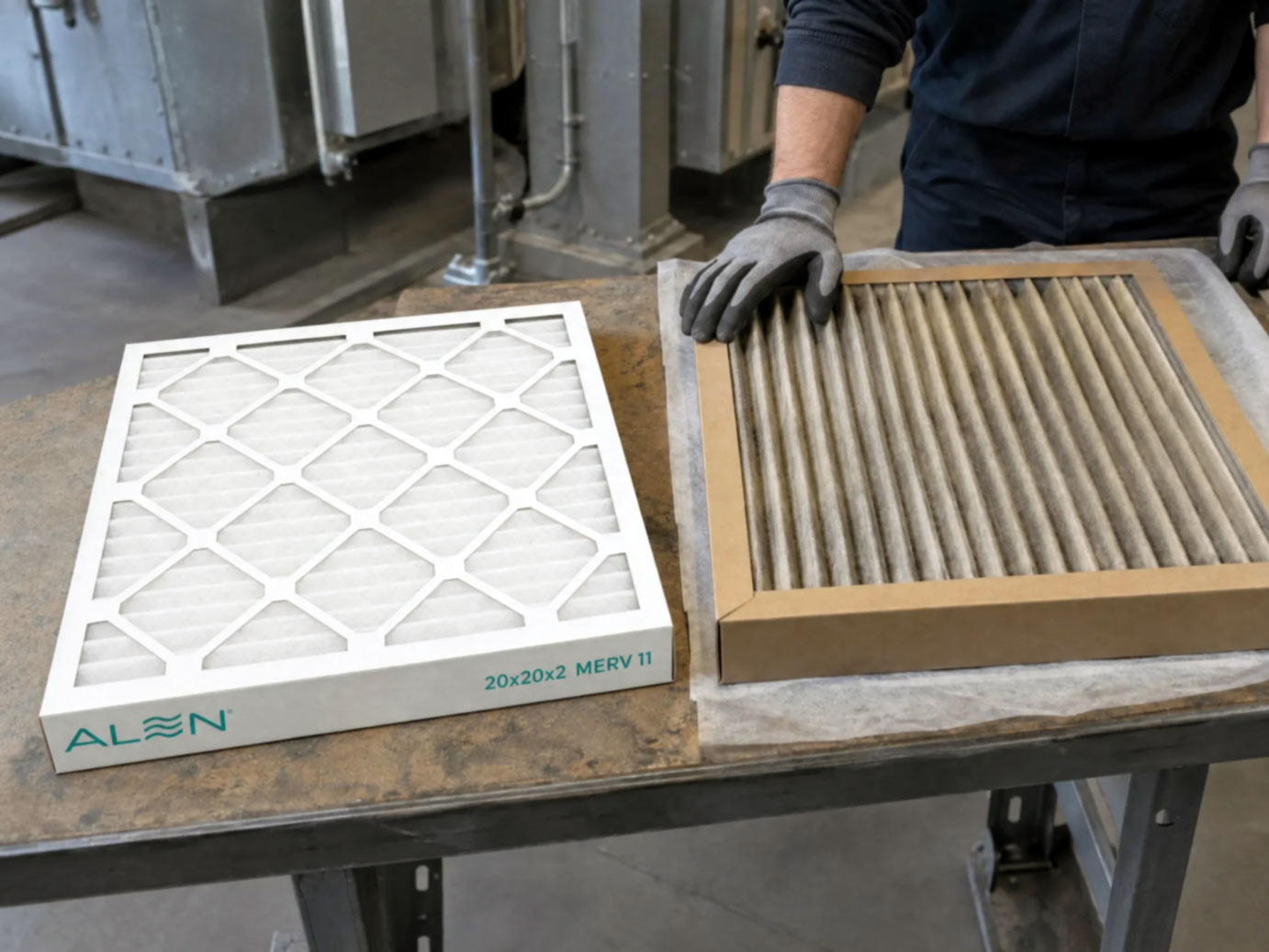
How to Save Your District Money With Alen For Business
Alen For Business helps school districts evaluate capacity, airflow, and service life alongside their equipment and maintenance needs. We offer MERV 8, MERV 11, and MERV 13 HVAC filtration options, including custom sizes and configurations for specialized systems.
Explore potential material savings with our filter material savings calculator. For a broader look at labor and operating costs, see the HVAC financial model for schools. Both offer scenarios to help start a comparison for your district.


Proactive Health Leadership
Move from reactive air management to proactive health leadership. Air quality monitoring (AQM), airID technology, and environmental sensors provide real-time awareness of indoor air conditions. Insights that allow you to identify issues early and optimize air performance.

Build Trust
Transparent air performance and solid sustainability practices builds confidence with employees, customers, and stakeholders.
Request a Consultation
Get a personalized and detailed assessment of your school district's needs, and how Alen For Business can help save you money and streamline your operations.

Online & Phone Operating Hours
Mon to Fri: 8AM–5PM CST
The Program
About Us
Online & Phone Operating Hours
Mon to Fri: 8AM–5PM CST