Contact Us
Nationwide Support
Our team of air quality experts is specially trained to understand the unique challenges of each region across the United States.
Connect with an expert!

Reduce Airborne Exposure
The Alen Partnership Program uses high capacity medical-grade HEPA filtration. By continuously removing fine particles from the air, organizations can reduce airborne exposure risks and support healthier spaces for everyone.
Streamline Operations
Easily manage devices and filter maintenance through a centralized system. Teams can track performance, schedule filter changes, and maintain reliable air purification without complicated workflows or manual oversight.

Simplify Procurement
Find budget efficiencies with an easy procurement process, reduce costs with fewer changeouts, and improve efficiency with better data.
Knowledge Center
Fall Allergies in Schools: How to Improve Classroom Air Quality
Fall brings your students back into classrooms just as several seasonal allergens begin reaching their peak. Ragweed, one of the most common fall allergy triggers, typically peaks in September across much of the United States.
But it isn't the only allergen your district needs to consider. Other weed pollens, including pigweed and sagebrush, can remain prevalent through the fall, while fall elm pollen and outdoor mold spores create additional challenges depending on your region's climate and vegetation.
And the scale of exposure can be significant. According to the CDC, a single ragweed plant can produce approximately 1 billion pollen grains in a season. These microscopic particles travel easily on the wind and can enter school buildings through doors, outdoor-air ventilation, and everyday building activity.
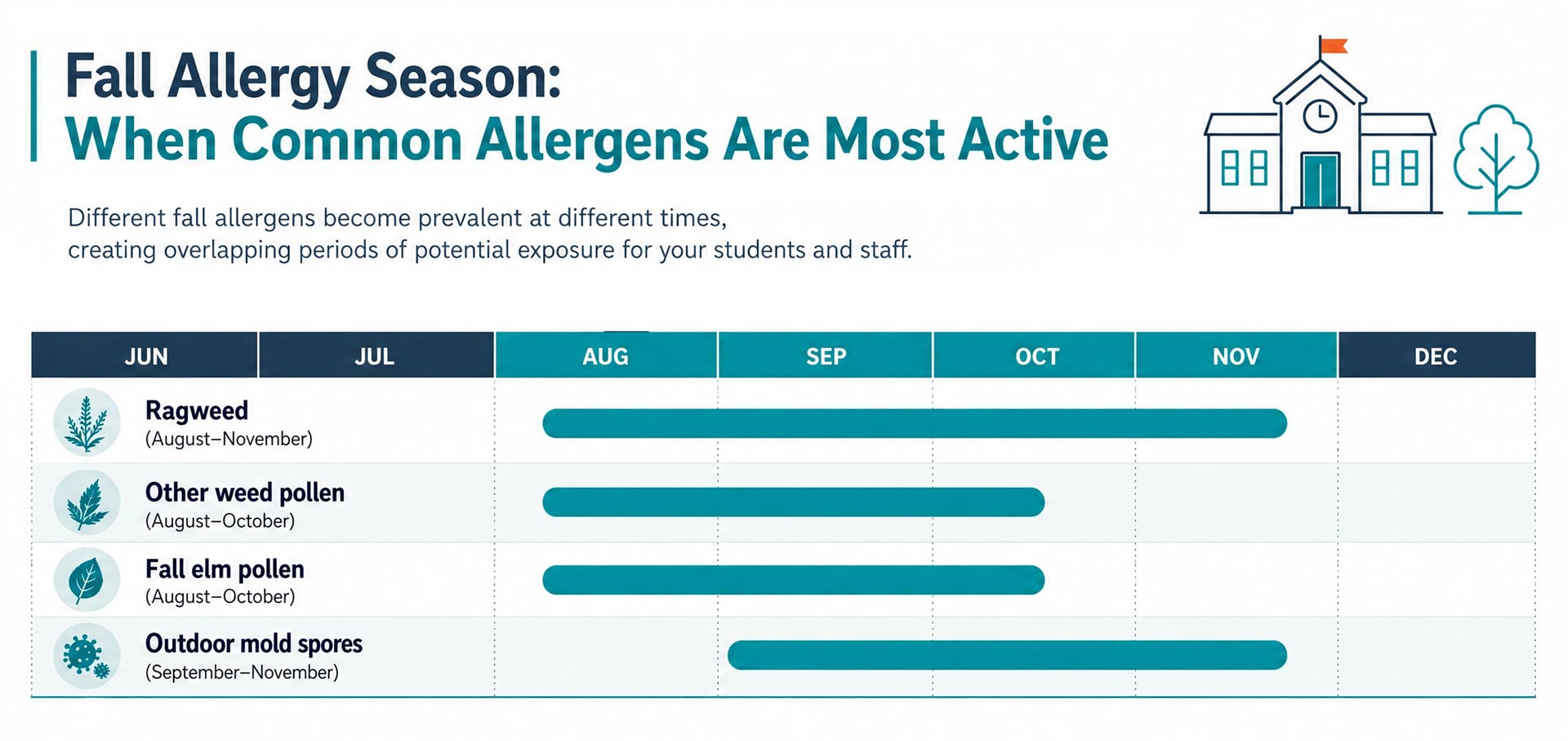
And because these allergens follow different seasonal patterns, your district may face overlapping periods of elevated exposure throughout the fall. Understanding which allergens are most prevalent in your region, and when they're likely to peak, is an important first step in preparing your classrooms.
When Do Fall Allergens Peak?
Fall allergy season looks different depending on where your schools are located. While ragweed is a major trigger across much of the country, other allergens peak at different times throughout the season.
Here's a closer look at common fall allergens and when they tend to be most prevalent:
Ragweed (August–November)
Most prevalent in the Midwest and Northeast, including states such as Ohio and New York. Pollen levels typically peak in September, with the season ending earlier in colder northern states and potentially extending into November in warmer southern regions.
Other weed pollen (August–October)
Pigweed is a common fall allergen in the South and Great Plains, including Texas and Oklahoma. Sagebrush is especially prevalent in the Western U.S., particularly the Great Basin and Rocky Mountain regions, while mugwort contributes to late-summer and fall pollen exposure in parts of the Northeast and other temperate regions.
Fall elm (August–October)
This is especially relevant in the South-Central U.S., including Texas and Oklahoma, where cedar elm and certain other elm species release pollen in late summer and fall. Unlike spring-pollinating elm varieties, these trees can contribute to a second wave of tree pollen during the school year.
Outdoor mold spores (September–November)
Mold is of higher concern in the Northeast, Midwest, and humid Southeast, where damp fallen leaves, decaying vegetation, and seasonal rainfall can increase outdoor mold exposure. In warmer, humid southern states, outdoor mold spores may remain present throughout much of the year.
Why Fall Allergy Season Matters for Your School
Fall brings a combination of environmental challenges that can affect student health and learning. In fact, the Asthma and Allergy Foundation of America (AAFA) identifies September as an especially challenging period for people with asthma, particularly children.
Depending on your region, students may be exposed to elevated levels of ragweed, pigweed, mugwort, sagebrush, fall elm pollen, and outdoor mold spores throughout the season. At the same time, students returning to school encounter respiratory illnesses and additional indoor allergens, creating overlapping challenges for those with allergies or asthma.
The consequences extend beyond sneezing and congestion. Exposure to allergens can trigger coughing, irritated eyes, and breathing difficulties, while worsening asthma symptoms can make it harder for students to participate in classroom activities.
Allergies can affect learning, too. One peer-reviewed study found that 56% of children with allergic rhinitis reported difficulty performing schoolwork or other activities, compared with 17% of children without the condition.
And attendance can also suffer. When airborne allergens trigger or worsen allergy and asthma symptoms, students may miss school. And in states where district funding is tied to daily attendance, those absences can carry financial consequences. One estimate suggests that a single missed student day can represent roughly $65 in lost funding, depending on the state.
For your district, managing fall allergens can help support student comfort, classroom participation, and consistent attendance. And because allergen activity varies by region and throughout the season, preparing your buildings requires ongoing attention to indoor air quality.
Outdoor Allergens Follow Students and Staff Indoors
Closing the classroom door does not create a boundary between outdoor and indoor air. Pollen from ragweed, pigweed, mugwort, sagebrush, and fall elm, along with outdoor mold spores, can enter your buildings through ventilation systems, open doors, and windows.
Students and staff can also bring allergens inside without realizing it. Pollen and mold spores can cling to clothing, shoes, backpacks, and other belongings, traveling from playgrounds, parking lots, athletic fields, and outdoor spaces directly into classrooms.
Once indoors, these allergens can settle on desks, floors, carpets, and other surfaces. Everyday activities like walking, moving chairs, or cleaning can stir settled particles back into the air, extending exposure long after students have entered the building.
And outdoor allergens are only part of the picture. Dust, animal allergens, and other indoor triggers may already be present, while excess moisture or leaks can contribute to indoor mold growth. As a result, students may continue encountering airborne allergens throughout the school day, even when windows and doors are closed.
This creates an ongoing challenge for your facilities team. Regional pollen levels and weather conditions change throughout the fall, and the airborne particles entering your buildings change with them.
Alen For Schools helps your district respond to these changing conditions through a coordinated approach to HVAC filtration, targeted HEPA purification, and ongoing air quality monitoring.
A More Complete Approach to School Air Quality
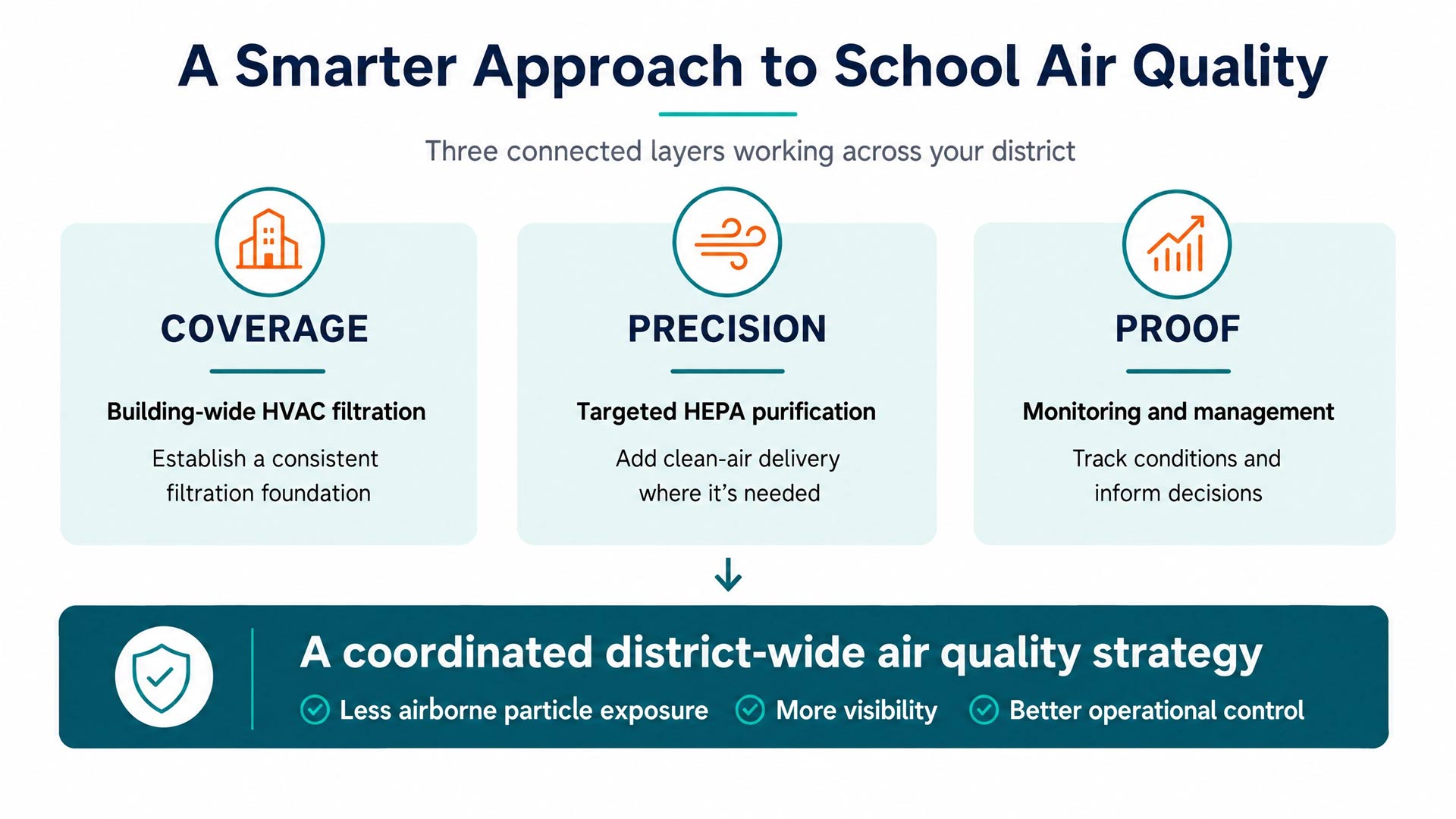
Managing indoor air quality across an entire school district requires a coordinated approach. HVAC filtration helps reduce airborne particles throughout your buildings, but individual classrooms may need additional support. And without ongoing monitoring, it's difficult to know when conditions change or whether your efforts are making a measurable difference.
That's why Alen For Schools brings together three complementary layers: Coverage, Precision, and Proof.
Coverage establishes a foundation of building-wide Alen High Capacity HVAC filters.
Precision adds targeted HEPA air purification in classrooms and other high-priority spaces.
Proof uses air quality monitoring and connected management tools to track conditions, identify areas that need attention, and help evaluate performance.
Together, these three layers give your district a more comprehensive way to reduce airborne particle exposure, make informed decisions, and manage indoor air quality consistently across campuses.
Coverage: Reduce Airborne Particles Across Your Buildings
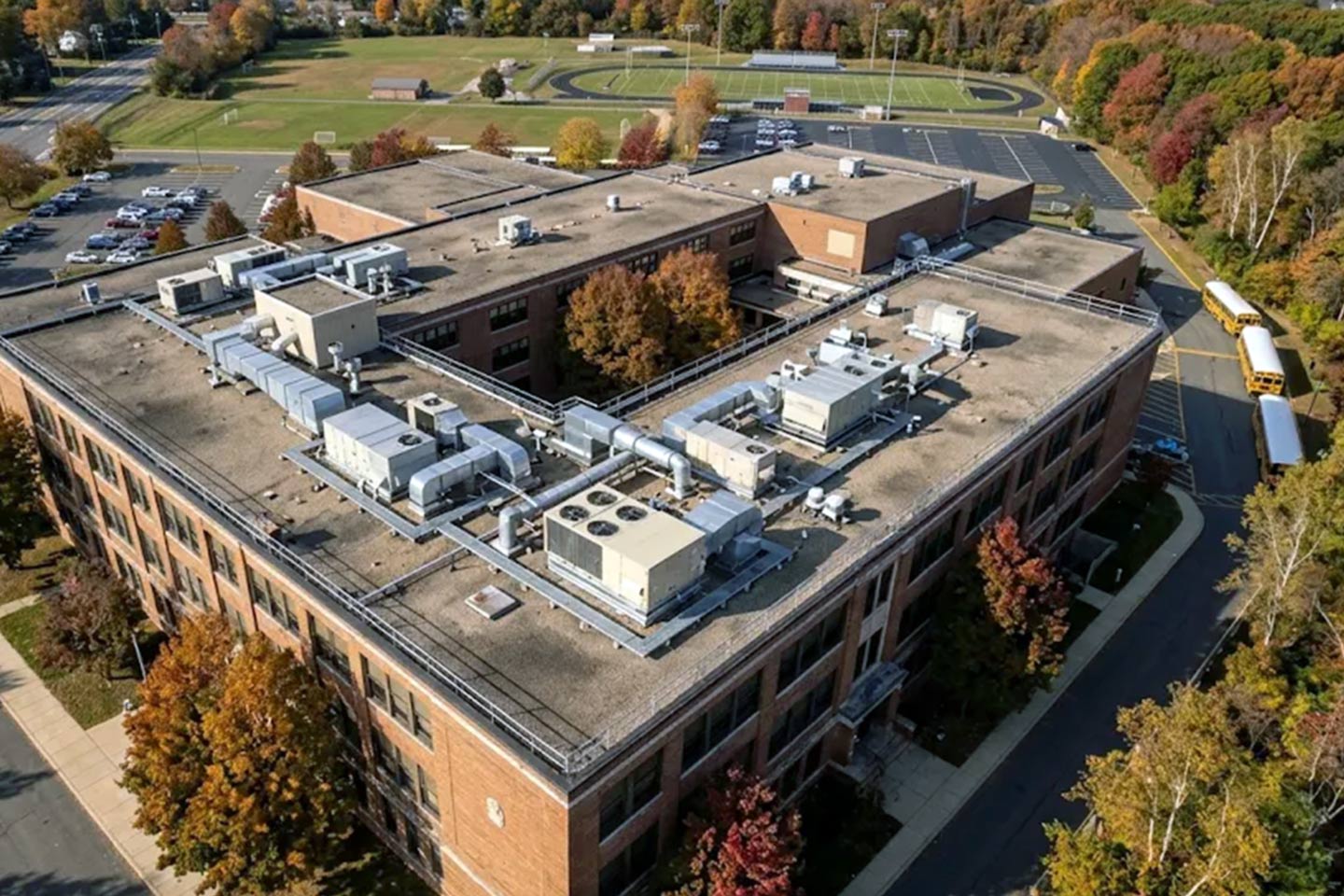
The first layer is building-wide filtration. Your district's existing HVAC systems move and filter air throughout your schools, making them a natural starting point for improving indoor air quality.
But selecting the right filters means looking at how your HVAC equipment operates. You need filters that capture airborne particles effectively while allowing your systems to move enough air to keep classrooms comfortable.
That's why Alen's Coverage approach considers your existing HVAC equipment, airflow needs, filter replacement schedules, and maintenance costs.
This approach helps your district:
Maintain effective airflow: Choose filters that capture airborne particles while allowing your HVAC fans to move the air your classrooms need.
Reduce maintenance demands: Evaluate whether Alen High Capacity filters could help your team spend less time changing filters, depending on system requirements and filter performance.
Manage operating costs: Consider how often filters need replacing, how much maintenance time each replacement requires, and what your district spends on filters each year.
Improve consistency across campuses: Establish appropriate filter selection and replacement practices across your buildings with compatible HVAC systems.
And if you’re managing multiple campuses, consistency matters. Different HVAC systems may require different filters, but your team can still establish a coordinated approach to purchasing, maintenance, and replacement schedules.
By reviewing filter needs across your buildings, you can identify opportunities to reduce unnecessary replacements, simplify ordering, and give your maintenance team more time for other important work.
Coverage establishes your building-wide filtration foundation. The next step is addressing the classrooms and shared spaces that need additional support.
Precision: Room-Level Filtration for Your High-Occupancy Classrooms
A classroom can present a very different air-quality challenge from a corridor, administrative office, library, or storage area. There are so many varying factors: occupancy, room size, ventilation, building age, and activities, to name a few.
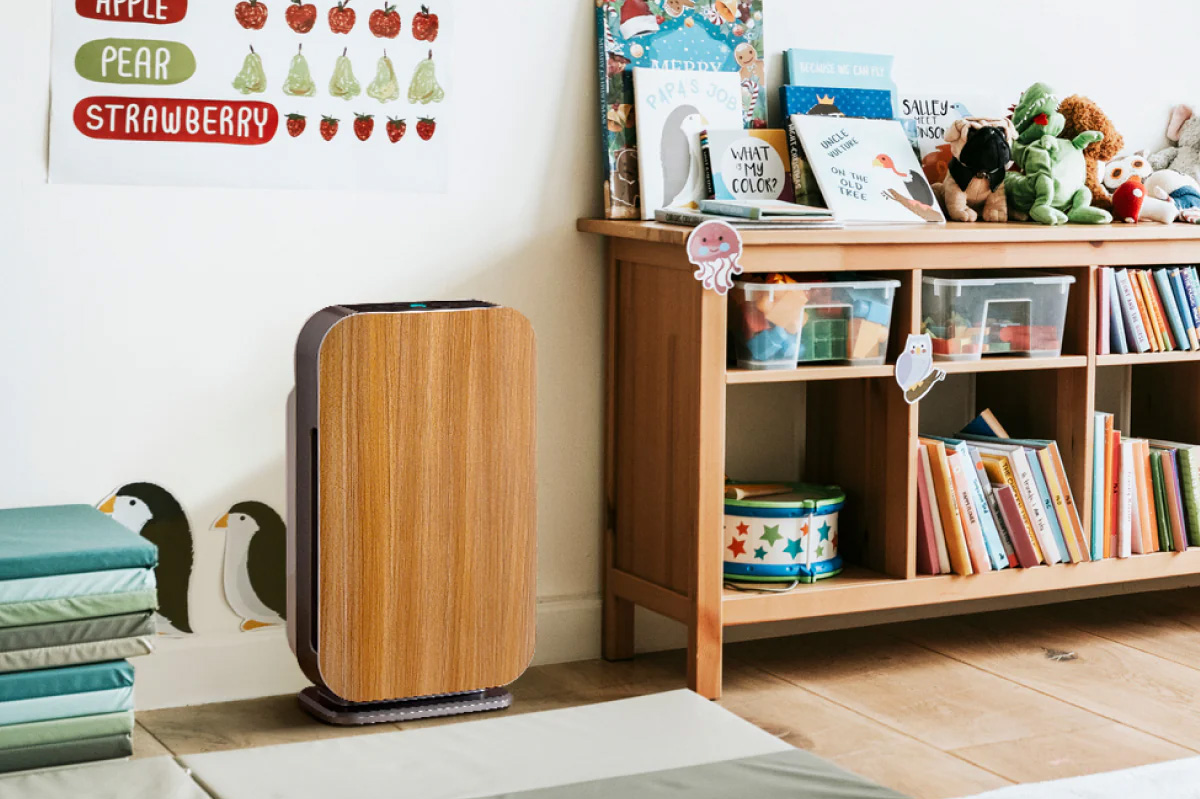
That’s why the second layer in the Alen approach is Precision: adding portable HEPA air purification to classrooms and other areas where additional support is needed. Rather than attempting to replace the building's HVAC system, room-level purifiers add targeted support through high-efficiency filtration.
With Alen's Precision approach, your district can:
Capture airborne allergens. Alen's HEPA filters capture 99.9% of airborne particles as small as 0.1 microns that pass through the filter, including common allergens such as pollen, dust, and pet dander.
Support high-occupancy classrooms. Add clean air delivery in spaces where students and teachers spend hours together each day.
Address room-specific needs. Select purifiers based on classroom size, occupancy, ventilation conditions, and clean air delivery requirements.
Supplement existing HVAC systems. Reduce airborne particles through continuous room-level filtration without adding resistance to your building's HVAC airflow.
Together, these benefits help your district provide more targeted air quality support in the spaces where you need it most.
Proof: Know When Conditions Change
Installing filtration is only part of managing air quality across a school district. You also need to know what's happening inside your buildings, especially when outdoor pollen levels rise, and classroom conditions change throughout the day.
Without ongoing monitoring, recurring air quality issues can go unnoticed. A classroom may experience particulate spikes during morning arrivals, lunch periods, or after-school activities, but without data, you have limited visibility when those changes occur or whether additional filtration is needed.
Alen's Proof approach combines air quality monitoring, connected air purifiers, and centralized management to give your team greater visibility across classrooms and campuses.
Through the Alen Air app and supported connected monitoring devices, your facilities team can:
View current air quality conditions: Check room-level air quality status and identify spaces that may need attention.
Track air quality trends over time: See how conditions change throughout the school day, including recurring patterns during high-occupancy periods or seasonal outdoor air events.
Compare classrooms and campuses: Identify which spaces experience recurring air quality changes and prioritize areas that may need additional support.
Monitor purifier performance: Check connected devices, review operating status, and manage purifier settings and schedules remotely.
Manage filter maintenance: Track filter status and coordinate replacements across multiple buildings.
Evaluate changes: Review air quality trends after adjusting purifier placement, settings, or schedules to determine whether conditions appear to improve.
For example, if monitoring reveals recurring particulate spikes in a classroom during morning arrivals, your facilities team can investigate possible sources, adjust purifier operation, and review subsequent readings to see whether particle levels improve. This creates a more informed approach to air quality management, supported by actual room conditions.
What Asthma & Allergy Friendly® Certification Means for Schools
When you evaluate products intended for occupied classrooms, manufacturer specifications are only one source of information. But independent certification provides another.
The Asthma & Allergy Friendly® Certification Program is operated by the Asthma and Allergy Foundation of America in partnership with Allergy Standards Limited. Products carrying the certification must meet defined scientific standards and undergo independent testing.
For air purifiers, that evaluation is particularly relevant to products being considered for environments occupied by people with asthma and allergies.
The program's certified product guide includes the Alen BreatheSmart 25i, 35i, 45i, and 75i among its certified portable air purifiers. Other manufacturers also have certified products, making the certification an independent standard that districts can incorporate into product evaluation.
Certification does not mean an air purifier treats asthma or allergies, nor does it replace appropriate medical care or a comprehensive IAQ strategy. But it does provide valuable third-party validation against established criteria.
That can be especially important when purchasing decisions must be explained to administrators, school boards, parents, teachers, and other stakeholders.
Real Results: A 75% Reduction in Airborne Particles at Courtyard by Marriott
How much of a difference can targeted HEPA air purification make in a shared indoor space? Testing at the Courtyard by Marriott San Antonio Medical Center provides a measurable example.
In this study, Alen BreatheSmart 75i HEPA air purifiers were tested in hotel meeting rooms to evaluate their impact on indoor air quality. The results were significant. With continuous operation, Alen purifiers reduced average PM1.0 particulate levels by 75%, from 9.35 µg/m³ to 2.3 µg/m³.
The study also found that the purifiers helped disperse concentrated fine particles within two minutes of a simulated airborne particle event. With two purifiers operating, particle levels returned to the lower baseline in approximately six minutes.
For your district, these findings highlight the potential value of targeted classroom purification. Just as hotel meeting rooms bring people together for extended periods, classrooms are shared indoor environments where airborne particles can accumulate throughout the day.
By combining building-wide HVAC filtration with appropriately sized classroom HEPA purifiers and ongoing air quality monitoring, your district can take a more informed approach to reducing airborne exposure.
And with measurable performance data, your facilities team can better understand where additional filtration may be beneficial and evaluate whether your air quality investments are delivering results.
A Fall Allergy Readiness Checklist for Facilities Teams
Your district may already have HVAC filtration, classroom air purifiers, and established maintenance routines. But how do you know those systems are providing the protection your students need, especially as outdoor allergen levels rise?
Fall allergy season is an opportunity to look beyond whether equipment is installed and evaluate how well your district is managing airborne exposure.
1. Are your HVAC filters maintaining airflow as they collect particles?
As HVAC filters collect dust, pollen, and other airborne particles, it can become harder for air to pass through them. This may affect how much air reaches your classrooms, especially in older buildings with HVAC systems that have limited capacity.
For your district, that could mean inconsistent temperatures, uncomfortable classrooms, and more work for your HVAC equipment. Higher filtration efficiency alone doesn't guarantee better indoor air quality if the system cannot maintain adequate airflow.
What to consider: How often does your team change filters? Are those replacements based on actual filter condition and HVAC performance, or simply a set schedule?
Could Alen High Capacity filters help your district reduce unnecessary filter changes while maintaining appropriate airflow? Evaluating your existing equipment and filter performance can help determine whether longer replacement intervals are practical.
2. Are some classrooms getting less effective air cleaning than others?
Two classrooms in the same building can have very different air quality conditions. Room size, occupancy, ventilation, and daily activities all influence how quickly airborne particles accumulate and how effectively they're removed.
Even when portable HEPA purifiers are installed, their performance depends on how much clean air they deliver relative to the room's needs. A purifier that works well in a small office may provide insufficient air cleaning in a crowded classroom.
What to consider: Do you know how much clean air your highest-occupancy classrooms actually receive? Are your purifiers delivering sufficient clean air for each space, or are you relying on manufacturer coverage claims without accounting for classroom conditions?
3. What are you missing when you can't see changes in air quality?
Without continuous monitoring, your facilities team may have limited visibility into what happens between scheduled inspections. A classroom could experience recurring particulate spikes during peak occupancy, cleaning activities, or periods of elevated outdoor pollution without anyone noticing.
By the time students or teachers report discomfort, your team may have missed opportunities to identify patterns and investigate potential causes.
What to consider: Can you identify which classrooms experience recurring particle spikes, when those changes occur, and whether conditions improve after an intervention? Without that visibility, how can you determine where additional filtration is needed or whether your current strategy is working?
4. How much time and money does your district spend changing HVAC filters?
Every filter change takes time. Your maintenance team needs to locate the correct filters, access the HVAC equipment, remove used filters, install replacements, and dispose of the old ones.
Across multiple campuses, those tasks add up. Frequent filter changes can mean more trips to rooftops, more filters to purchase and store, and less time for other maintenance priorities.
What to consider: How many times does your team change HVAC filters each year? How much staff time does each round of replacements require? Could Alen High Capacity filters save your school money and reduce unnecessary maintenance?
These questions help reveal where your district lacks visibility, where equipment performance could be improved, and where resources could be better used. Regardless of what season it is.
From Seasonal Response to Year-Round Air Quality Strategy
Fall allergy season creates urgency, but it should not define the limits of your indoor air quality program. The same infrastructure used to reduce airborne particles during peak pollen season can help you respond to changing conditions throughout the school year.
Instead of approaching indoor air quality as a series of isolated events, you can establish a system that provides building-wide coverage, targeted classroom precision, and ongoing proof of performance.
For fall allergy season, that means reducing airborne particle exposure as outdoor allergens move indoors.
For your district, it means something broader: knowing where filtration is needed, managing it efficiently across multiple buildings, and having data to demonstrate that your air-quality strategy is working as intended.
Review Your District's Fall Air Quality Strategy
Alen works with school districts to evaluate existing HVAC filtration, identify spaces that may benefit from targeted HEPA purification, and build monitoring and management systems that provide greater visibility across campuses.
Request a district air-quality review or talk with an Alen air-quality expert about your schools.


Proactive Health Leadership
Move from reactive air management to proactive health leadership. Air quality monitoring (AQM), airID technology, and environmental sensors provide real-time awareness of indoor air conditions. Insights that allow you to identify issues early and optimize air performance.

Build Trust
Transparent air performance and solid sustainability practices builds confidence with employees, customers, and stakeholders.
Request a Consultation
Get a personalized and detailed assessment of your school district's needs, and how Alen For Business can help save you money and streamline your operations.

Online & Phone Operating Hours
Mon to Fri: 8AM–5PM CST
The Program
About Us
Online & Phone Operating Hours
Mon to Fri: 8AM–5PM CST