Small School District
HVAC Filtration
Lower Total Cost with Fewer Changeouts
Like a lot of small school districts these days, you’re likely facing budget pressures. Increasing operational costs, rising inflation, declining tax revenue, and reduced federal aid are creating enormous budgetary challenges. These fiscal pressures are straining school districts and forcing cuts to staff, programs, and services. Small districts are feeling the pain even more acutely.

Calculate Your
HVAC Filter Cost
The good news is that Alen For Business saves costs and supports sustainability. You’re likely very aware that every area of savings helps your bottom line. Here’s a snapshot:
Lower materials cost: ~$8,200 annually
Reduced labor and risk exposure: ~$20,500 annually
Fewer classroom disruptions: filter changeouts cut in half
Stronger sustainability metrics: ~6 metric tons of CO₂ avoided/year
So, how would your small district benefit if you implemented this program? Let’s break it down.
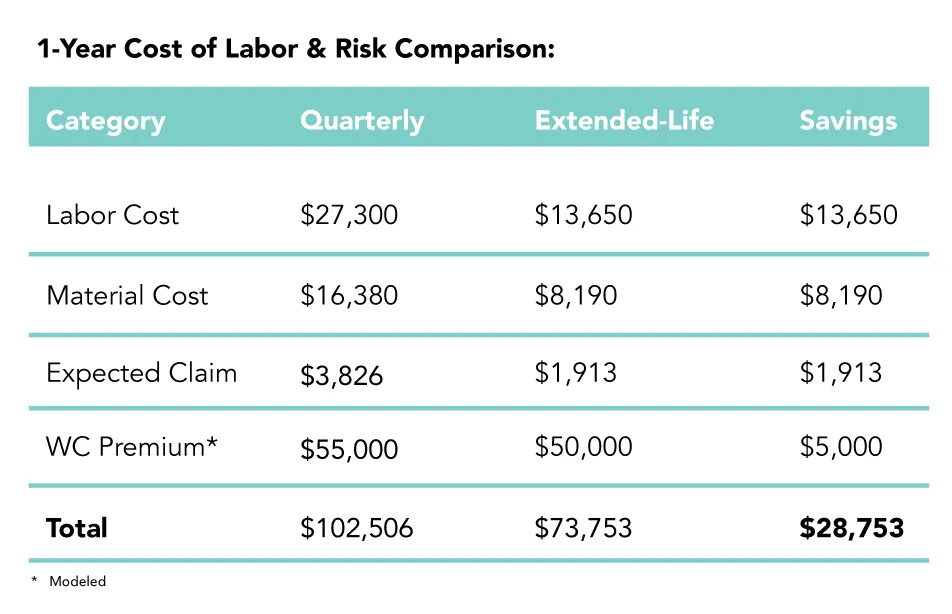
For a 15-school district, the cost of filter changes can appear manageable at first glance. The overall footprint is smaller, travel distances may be shorter, and staffing is often lean. But even at this scale, routine quarterly changeouts involve measurable labor costs and risks that accumulate throughout the year. This model shows how adjusting frequency (without changing equipment) can unlock savings while protecting limited technician capacity.
Interested in seeing a personalized model of your district’s savings? Reach out to Alen today, we’re happy to help.
Look Beyond Cost Per Unit
Filter material costs are visible, easy to compare, and often the first number procurement teams focus on. And yes, the model clearly shows that material savings are real. But that’s only part of the total operating picture, and not the largest driver.
The comparison of quarterly changes to an extended-life system depicted in the model above clearly shows material savings. But that’s only one part of the picture, and not the largest driver. Here’s a snapshot of the total operating picture:
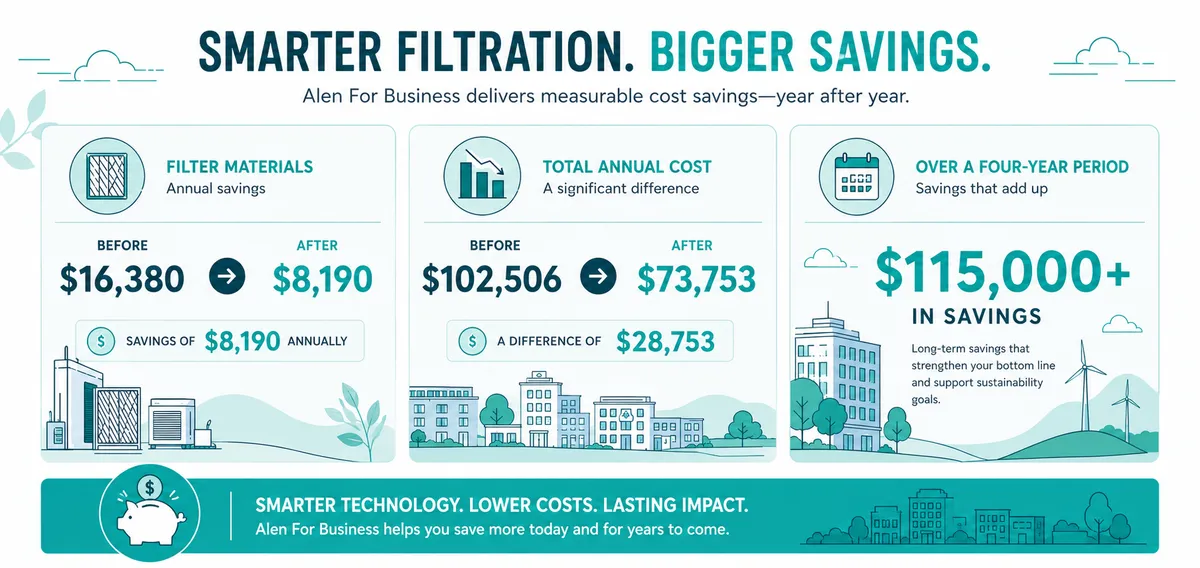
Filter materials: drop from $16,380 to $8,190, a savings of $8,190 annually
Total annual cost: drops from $102,506 to $73,753, a difference of $28,753
Over a four-year period: savings exceed $115,000
These savings allow you to reallocate critical resources to other valuable programs and services. That’s a win for your small district.
Clearly, evaluating filtration programs solely on per-unit pricing misses a big part of the equation. The true cost savings stems from the frequency of the entire maintenance cycle. Consider these activities: every change triggers technician travel, safety risks, administrative tracking, and insurance exposure that continue to accumulate. Keep in mind that quarterly filter maintenance also creates classroom disruptions and diminishes sustainability.
Alen For Business Can Have Sizable Sustainability Impacts
If your district is looking to create an environmental initiative that doesn’t require a substantial upfront investment, then the Alen For Business program can help. The extended-life program saves money, yes, but it also has measurable environmental benefits.
Extended-life filtration delivers environmental gains through operational redesign. It lowers material consumption, reduces waste, and trims fleet emissions while reducing labor hours and total operating costs. Extended-life filtration aligns cost control with responsible resource management. It’s the smart choice.
When replacing a quarterly replacement cycle to a twice-per-year optimized schedule, the reduction in waste, fuel use, and emissions compounds over time. It makes sense: fewer changeouts mean fewer filters in landfills, fewer technician trips between campuses, and lower transportation-related emissions. Let’s break it all down for a small district.
Baseline Assumptions (Small District – 15 Schools)
- Labor cost: $35/hour
- Time per filter (fully loaded): 10 minutes
- Cycles: 4/year (baseline) vs. 2/year (extended-life)
- 60% of units require roof/ladder access
- Claim rate: 0.5 per 10,000 roof visits
- Average fall claim cost: $54,499
- Filter cost: $3.50 per filter
1-Year Environmental Impact for a Small-Sized District
Reducing HVAC filter changeouts from four times per year to two cuts waste and emissions by half. But seeing the numbers in black and white enables you grasp the full impact, even within a single budget cycle. The following chart shows the breakdown of avoided waste:
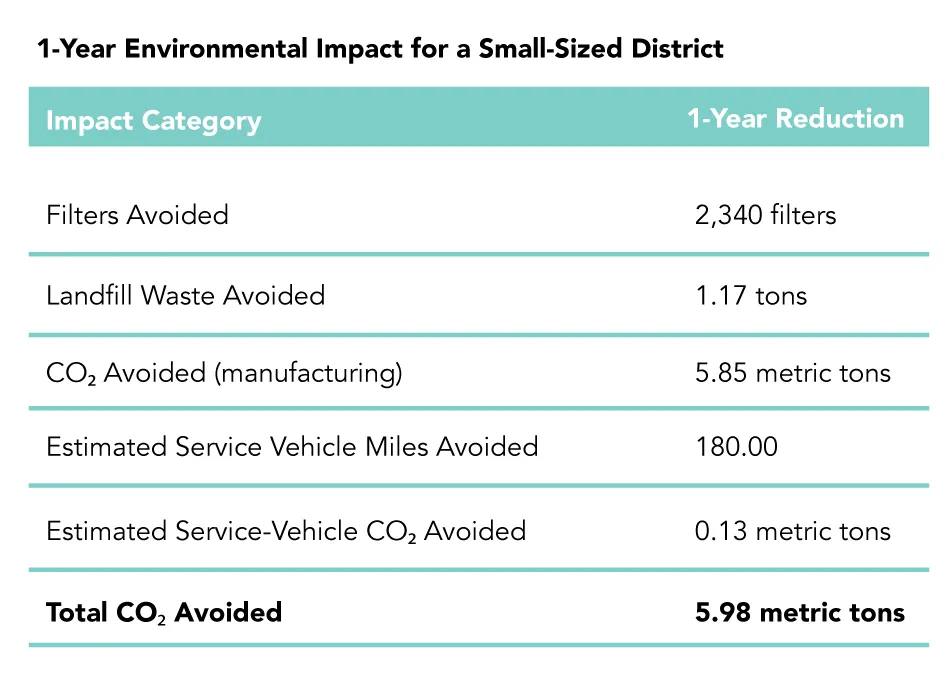
Service-mile assumptions are a conservative estimate because actual routing varies by district footprint, technician deployment, campus density, and crew structure. Filter waste and manufacturing-related CO₂ scale with filter volume.
It’s easy to see that production volume drives filtration’s environmental footprint. Fewer manufactured and transported filters directly translates to measurable sustainability gains.
The Cumulative Impact of Waste Reduction
In our model, more than two tons of waste are kept out of landfills annually. That’s a lot of waste even for a small district. Cutting replacement cycles in half for a small district eliminates approximately 2,340 filters each year. And since HVAC filters are designed for durability in air handling systems, they do not decompose efficiently after disposal. Components can take decades to degrade. With thousands replaced year after year, waste accumulates and remains in landfills for a long time. Future generations have to deal with the consequences.
Let’s also look at carbon dioxide emissions from filters. The model also shows that reducing production volume results in nearly 6 metric tons of CO₂ avoided annually from filter manufacturing alone, with additional reductions from decreased distribution and service travel. You may be surprised to know that most of the carbon impact associated with HVAC filtration occurs during raw material extraction, manufacturing, packaging, and distribution. And each avoided filter reduces emissions associated with synthetic media production, plastic frame fabrication, assembly, packaging, and transportation.
The Strategic Takeaway
Optimizing your HVAC filter program is one of those easy operational decisions. Why? Because it simultaneously saves costs, reduces labor and risk exposure, and promotes sustainability with minimal classroom disruption. Most facilities improvements require trade-offs, but filtration optimization is different. It’s about doing the right maintenance at the right time based on actual system conditions.
So, let’s recap the collective benefits. An extended-life approach for your district can:
Reduce labor demands by about half
Lower physical service activities and injury exposure
Avoid costly HVAC system upgrades while enhancing indoor air quality
Foster a positive environmental impact
The Bottom Line
Clearly, filtration frequency shapes labor, risk, cost, and performance across your facilities portfolio. An extended-life filter program allows you to save money, streamline operations, support healthier spaces, and promote sustainability. All are big wins, especially in a resource constrained environment.
Alen For Business requires no system replacements, no added labor costs, and no complicated workflows or manual oversight. It’s smarter maintenance aligning with how the facilities across your district actually operate. Your proactive health leadership will build trust with staff and students.
Ready to see how an extended-life filter strategy would improve your school district?
Talk with an Alen Expert at 800-630-2396 or send us an e-mail.
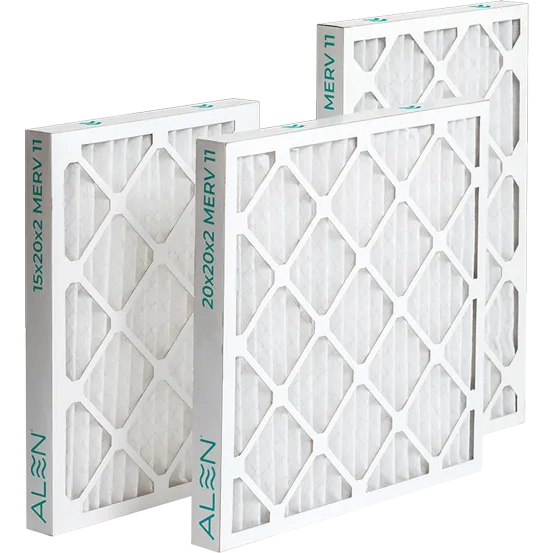
Beyond Standard Filtration
Not every facility has the same filtration needs. Some need reliable baseline performance across existing systems. Others need fewer annual changeouts, lower maintenance burden, or higher-capacity performance in constrained 1-inch track applications.
Our HVAC filter portfolio includes options designed for baseline filtration, reduced replacement frequency, and higher-capacity performance in space-constrained systems.

MERV 8
Baseline
Standard Up To Merv 13.
Reliable filtration for existing systems

MERV 10
High-Capacity
Fewer changeouts.
Lower operational burden.

MERV 13+
Max-Depth
Deep-bed-like performance in a 1” track. Reliable filtration for existing systems
Knowledge Center
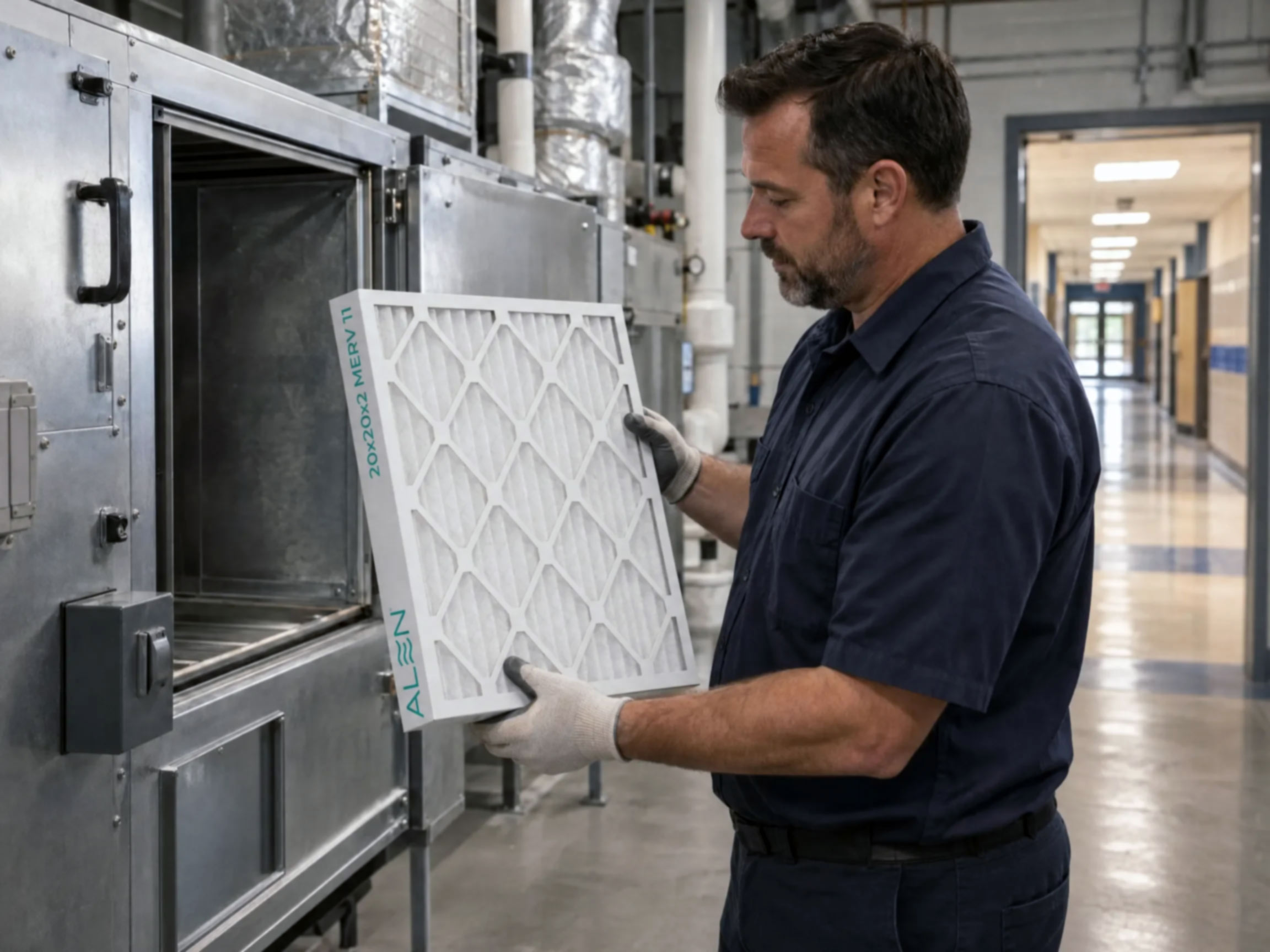
The High-Capacity Advantage: Why Filter Design Matters
Learn how high-capacity HVAC filter design can extend filter life, maintain airflow, and deliver long-term value for school districts. ...more
HVAC Articles
September 18, 2026•4 min read
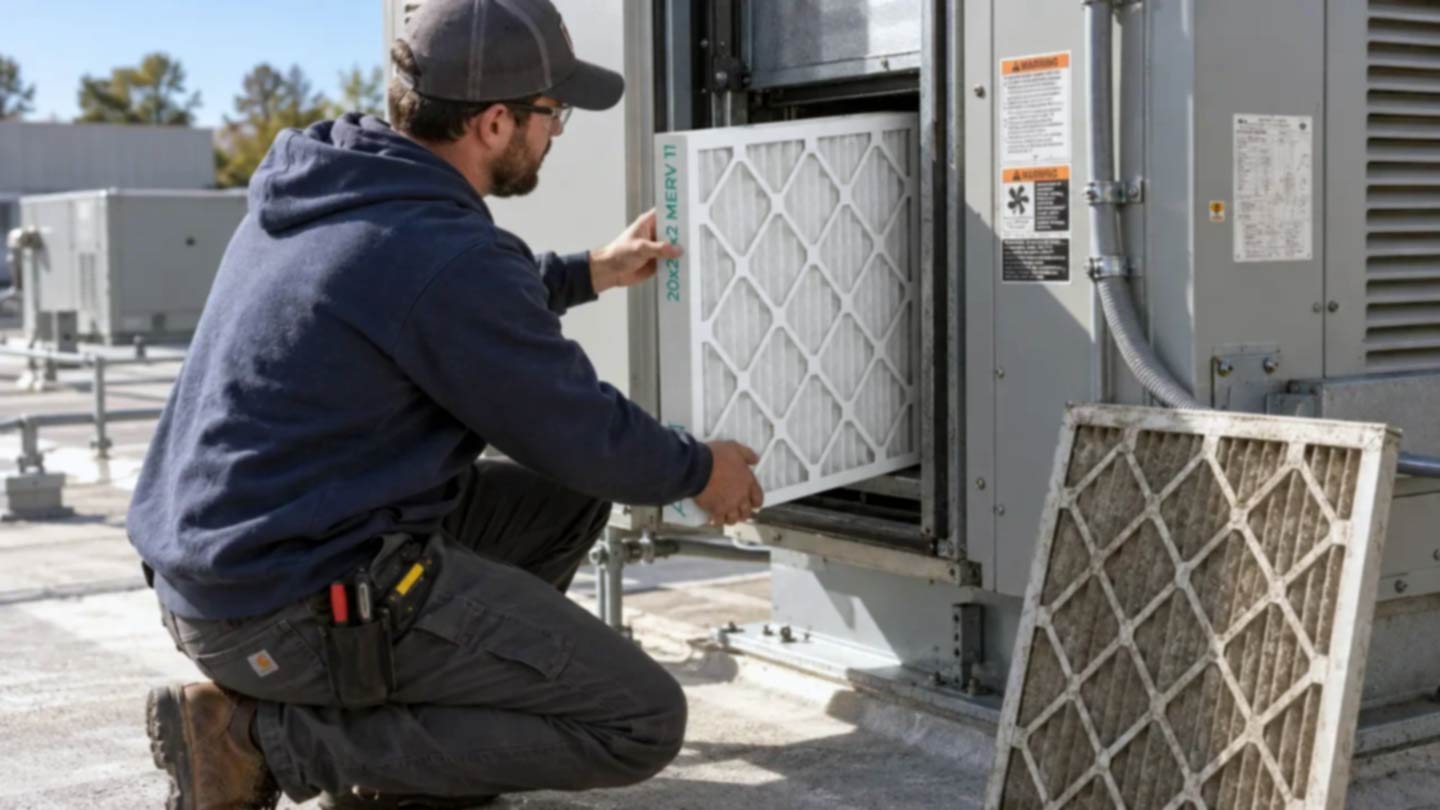
5 Ways High-Capacity Filters Can Save Your School District Money
See how high-capacity HVAC filters can help your school district reduce filter purchases, maintenance demands, inventory, and waste through longer service life. ...more
HVAC Articles
September 18, 2026•5 min read

Why Approved Vendors Still Create Problems For School Districts
Approved HVAC vendors do not always guarantee reliable delivery or consistent performance. Learn how school districts can prevent costly fulfillment issues by evaluating distributor stability, service... ...more
HVAC Articles
April 21, 2026•5 min read
Request a Consultation
Get a personalized and detailed assessment of your school district's needs, and how the Alen Partnership Program can help save you money and streamline your operations.

Online & Phone Operating Hours
Mon to Fri: 8AM–5PM CST
The Program
About Us
Online & Phone Operating Hours
Mon to Fri: 8AM–5PM CST