Put purifiers where they can make the biggest impact.
Purifier Placement & Optimization
Not every room has the same air quality need. For districts with Alen units across classrooms, offices, nurse areas, and shared spaces, app visibility and air quality trends can help facilities teams think more strategically about where purifiers are placed and which spaces may need additional review.
Core Resources
Start With Priority Spaces
Some rooms may need more attention than others.
Districts often deploy purifiers across many different types of spaces. The goal is to make sure units are supporting the rooms where they can provide the most value.
Nurse & health spaces
Special education & counseling spaces
High-occupancy classrooms
Front offices & shared staff areas
Older buildings
Rooms with known ventilation challenges
Review Where Units Are Placed
Make sure units are assigned to the right rooms.
Once supported units are connected and named in the app, facilities teams can use device location, room assignment, and air quality visibility to review whether purifiers are placed where they are most needed.
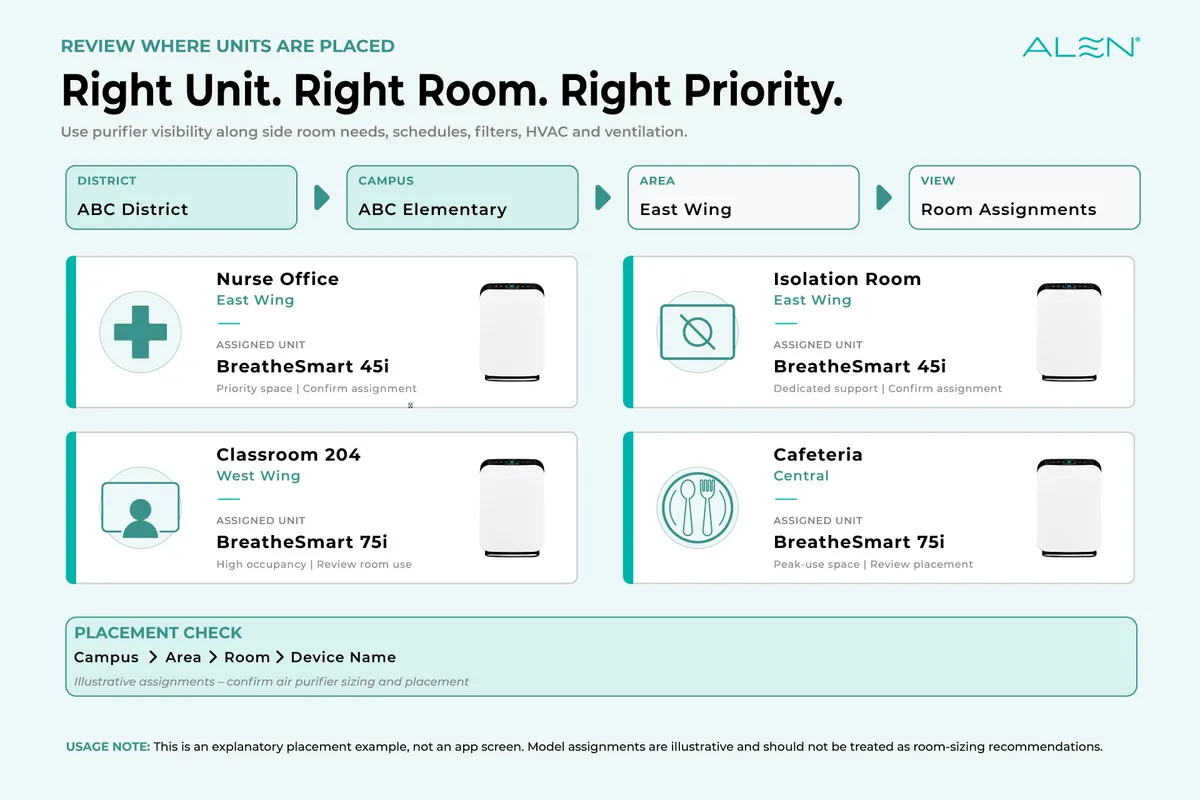
A simple placement review could include:
Review connected units by location
Confirm which units are assigned to each campus, building, or room.Identify priority rooms
Look for nurse offices, special-use rooms, high-traffic areas, or rooms with known concerns.Compare usage and air quality trends
Where supported, review whether certain spaces show recurring air quality changes.Adjust placement if needed
Move or reassign units based on room needs, building conditions, or facilities priorities.Update names and groups
Keep the app organized so teams know where each unit is located.
Use Trends to Guide Decisions
Let visibility help focus the conversation.
Air quality trends can help facilities teams identify rooms or buildings that may need a closer look. This does not replace facilities expertise, but it can help teams ask better questions about purifier placement, room use, ventilation, and filter planning.
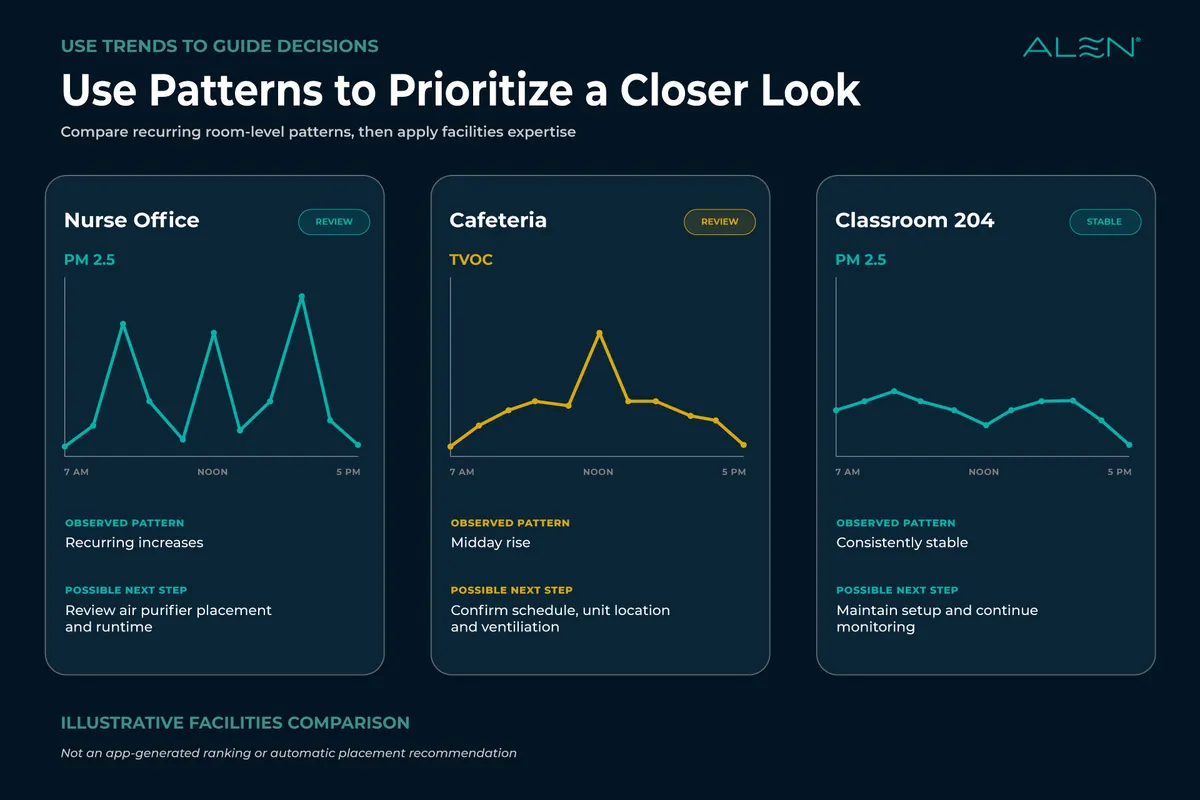
Teams can look for:
Rooms with recurring air quality changes
Spaces with longer runtime or higher usage
Areas where units may need to be repositioned
Buildings with known ventilation limitations
Priority rooms that may need dedicated purifier support
Locations where additional review may be helpful
Connect Placement to Broader IAQ Planning
Portable HEPA can support a larger facilities strategy.
Purifier placement is one part of a broader indoor air quality plan. Reviewing where units are deployed can help districts connect portable HEPA usage with HVAC, ventilation, filter replacement, and facilities planning.
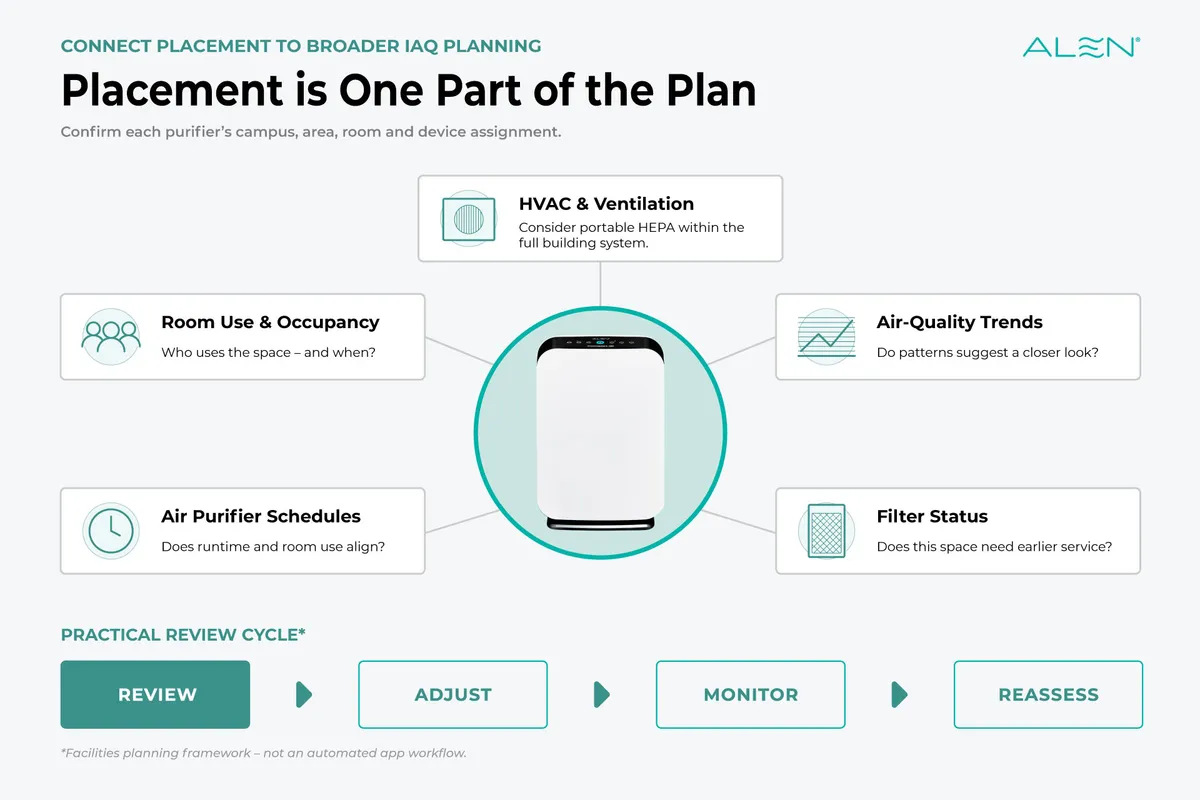
Placement reviews can support conversations around:
Which spaces need purifier support most
Whether units are being used in the right rooms
Whether schedules match room usage
Whether filter replacement needs vary by space
Whether certain rooms or buildings need HVAC review
Whether additional units or relocation may be needed
When to ask Alen for help...
Need help reviewing purifier placement across your district?
Alen can help your facilities team review app setup, unit locations, scheduling, filter replacement planning, purifier placement, and broader air quality needs.
This can be especially helpful if your district:
Has a large number of purifiers deployed across multiple campuses
Is unsure whether units are still located in the rooms where they are most needed
Has moved or reassigned units since their original deployment
Wants to prioritize nurse offices, special-use rooms, or other higher-need spaces
Sees recurring air-quality issues in certain rooms or buildings
Wants to connect portable HEPA placement with HVAC or ventilation planning
Is considering whether units should be relocated or additional purification is needed
Knowledge Center
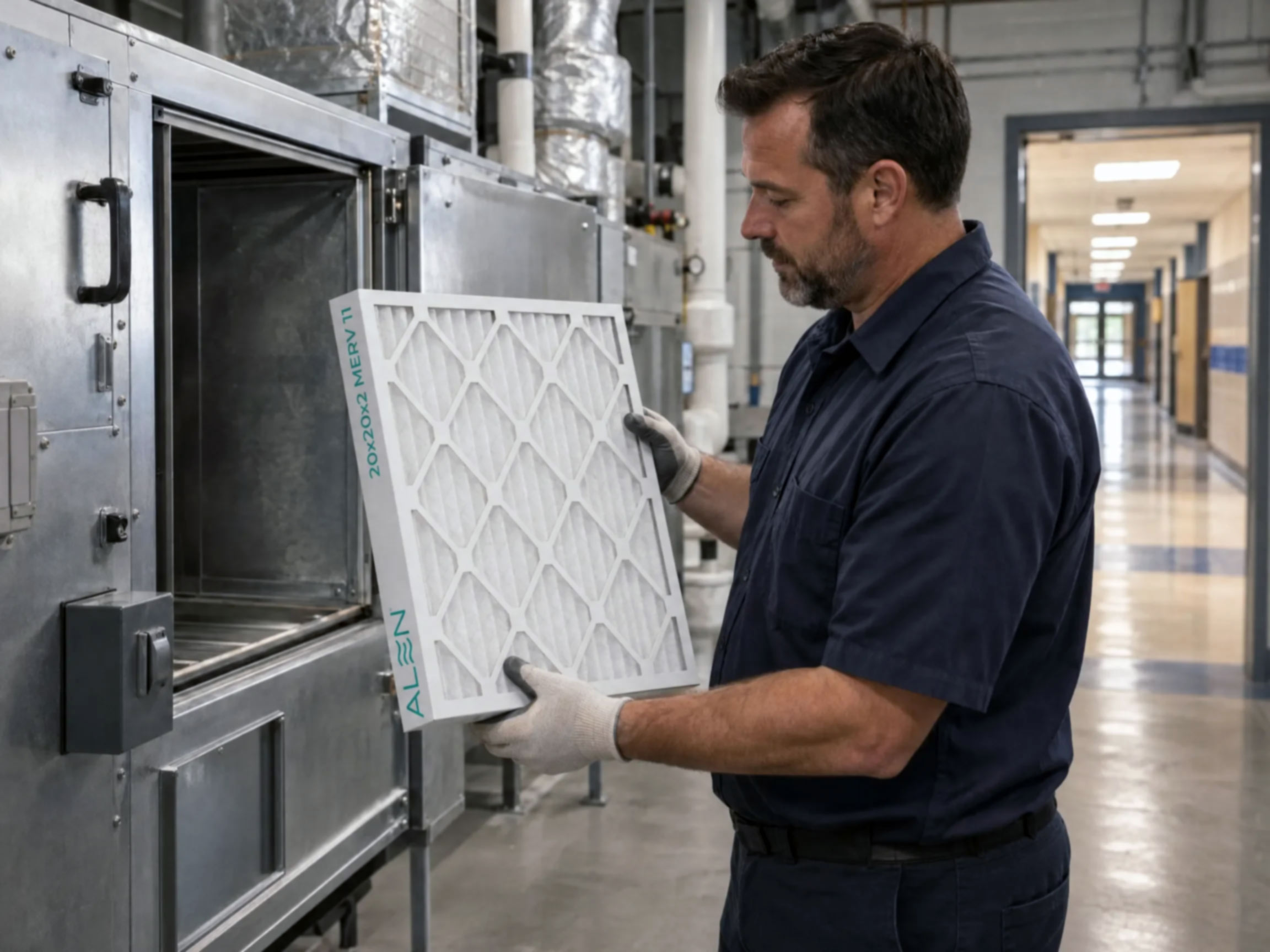
The High-Capacity Advantage: Why Filter Design Matters
Learn how high-capacity HVAC filter design can extend filter life, maintain airflow, and deliver long-term value for school districts. ...more
HVAC Articles
September 18, 2026•4 min read
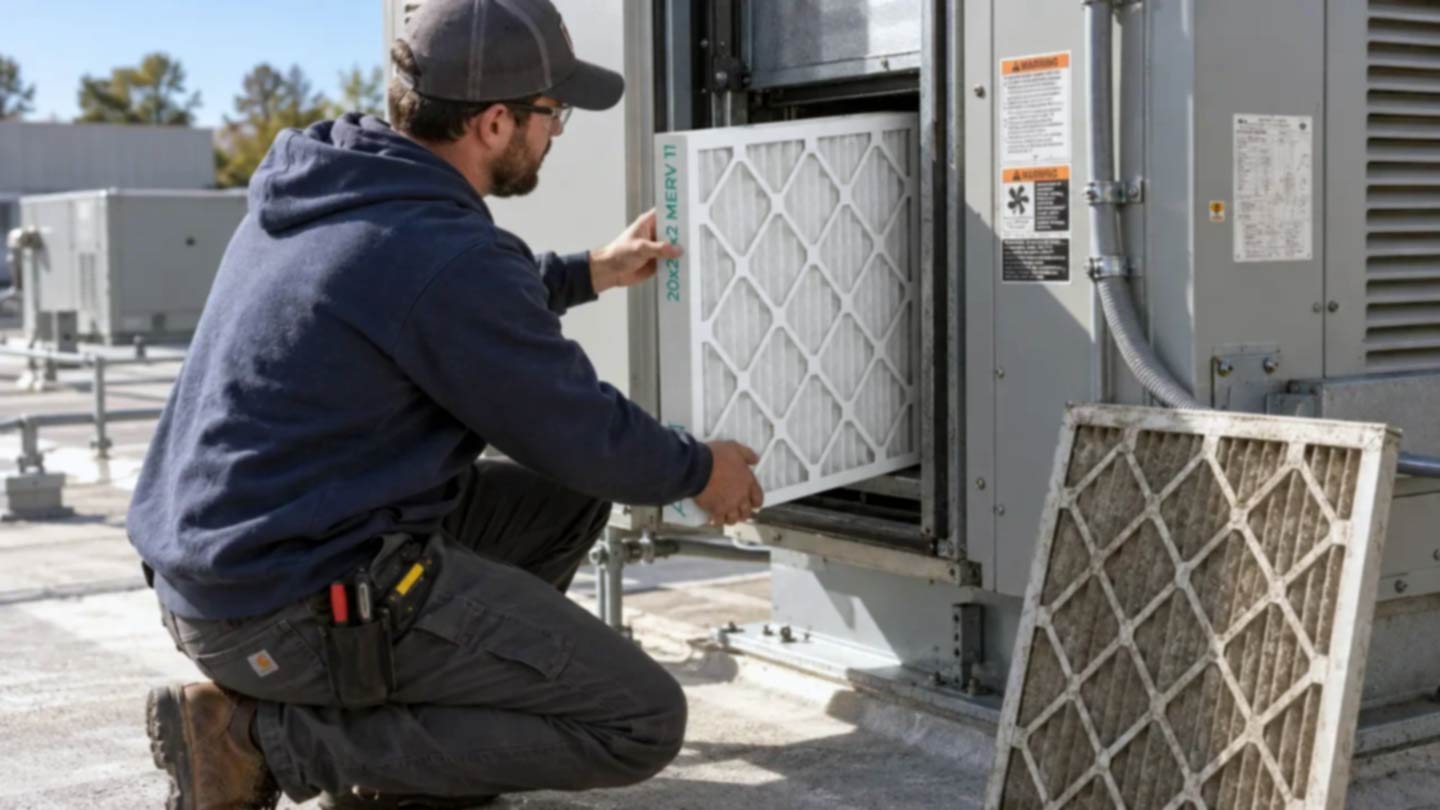
5 Ways High-Capacity Filters Can Save Your School District Money
See how high-capacity HVAC filters can help your school district reduce filter purchases, maintenance demands, inventory, and waste through longer service life. ...more
HVAC Articles
September 18, 2026•5 min read

When The Low Bid Becomes Expensive
Choosing the lowest-priced HVAC filters can actually increase total costs. Learn how extended-life filtration improves IAQ and saves schools $50K+ annually. ...more
Education Articles
April 21, 2026•6 min read
Request a Consultation
Get a personalized and detailed assessment of your school district's needs, and how Alen For Business can help save you money and streamline your operations.

Online & Phone Operating Hours
Mon to Fri: 8AM–5PM CST
The Program
About Us
Online & Phone Operating Hours
Mon to Fri: 8AM–5PM CST